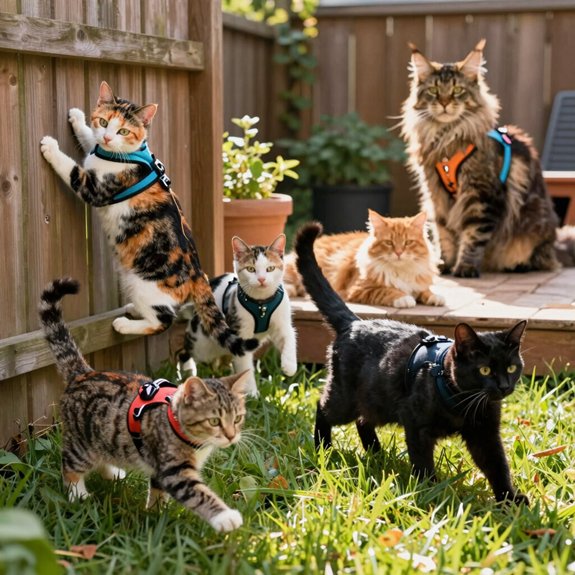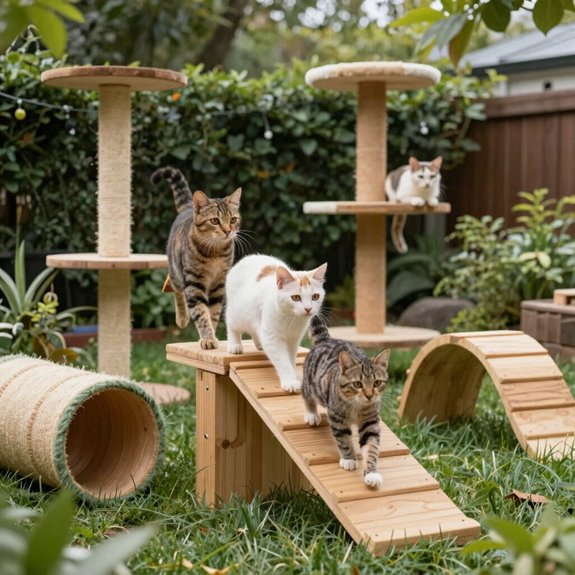

Harness training your dog for outdoor adventures can greatly enhance your experiences together. Start by selecting a well-fitting harness designed for comfort and safety.
Allow your dog to explore the harness, creating a positive association. Gradually introduce it during short sessions, using praise and treats to encourage acceptance.
Once your dog is comfortable, you’ll want to practice walking with distractions. Understanding each step will help your dog build confidence and improve your outdoor exploration.
Getting Started With Harness Training: a Step-By-Step Approach
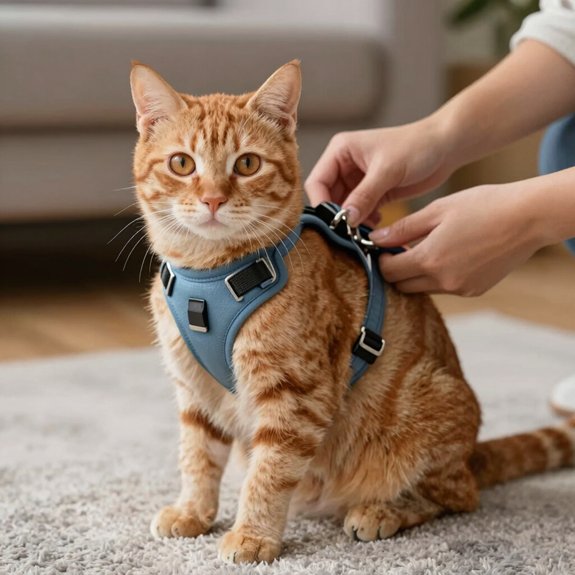
Getting started with harness training can feel a bit overwhelming, but breaking it down into manageable steps makes it easier and more enjoyable.
First, choose a suitable harness for your dog. Next, let them explore it by sniffing and examining.
Then, gently place it on them without fastening, allowing them to get used to the feel. Gradually, secure it, rewarding them for calm behavior during the process. Consider pairing harness training with interactive play sessions to keep your cat mentally stimulated and engaged throughout the learning experience.
Benefits of Harness Training for Your Dog
Harness training offers numerous benefits for you and your dog, making outdoor adventures more enjoyable and safe.
- Improves your dog’s control and focus
- Reduces pulling and strain on the neck
- Enhances your dog’s confidence during walks
- Promotes positive behavior and bonding
- Increases safety in unpredictable situations
These benefits contribute to a better experience for both you and your furry friend. Properly fitted harnesses with escape-proof mechanisms ensure your dog remains secure while exploring new environments.
How to Choose the Right Harness for Training

When it comes to maximizing the benefits of harness training, choosing the right harness is a key step.
Look for a harness that fits snugly but isn’t too tight. Consider different styles, like front-clip or back-clip options, depending on your dog’s behavior.
Check the material for durability and comfort, and ensure it suits your dog’s size and breed for effective training. A properly fitted harness enables outdoor exercise benefits that contribute to your cat’s overall health and well-being.
Getting Your Dog Comfortable With the Harness
Getting Your Dog Comfortable With the Harness
How can you help your dog feel at ease with a new harness? Start by introducing it gradually and positively.
Use these tips to create a comfortable experience:
- Let your dog sniff the harness first.
- Associate the harness with treats and praise.
- Practice wearing it for short periods.
- Use familiar surroundings for the introduction.
- Gradually increase wear time while engaging in fun activities.
Step-by-Step Guide to Putting on the Harness

Once your dog is comfortable with the harness, it’s time to learn how to put it on correctly.
Start by holding the harness open, ensuring the straps are straight. Gently slip it over your dog’s head, then guide the front legs through the designated openings.
Adjust the straps for a snug fit, making sure you can fit two fingers underneath for comfort. For senior cats, using a harness designed for elderly cats can prevent strain on aging joints and ensure their safety during outdoor exploration.
Essential Techniques for Leash Walking Training
Have you ever watched a well-trained dog walk calmly beside their owner, leash slack and tail wagging?
It’s a joy to see, and you can achieve this too! For effective leash walking, practice these essential techniques:
- Start with short walks.
- Use positive reinforcement.
- Keep the leash loose.
- Change directions frequently.
- Remain patient and persistent.
Your dog will soon enjoy exploring by your side! Understanding proper harness training techniques ensures your cat’s comfort and safety during outdoor adventures.
Building Confidence Outside: Gradually Introducing Distractions

As you and your dog become more comfortable with leash walking, it’s time to enhance their confidence outdoors by gradually introducing distractions.
Start with quiet areas, adding small stimuli like other dogs or people nearby. Observe your dog’s reactions, and reward calm behavior. Progressively increase distractions, ensuring your dog feels secure.
This gradual exposure helps build their confidence and improves their walking experience.
Using Positive Reinforcement to Manage Pulling and Resistance
How can you effectively manage your dog’s pulling and resistance during walks? Utilizing positive reinforcement makes a big difference.
Here’s how:
- Use treats when your dog walks beside you.
- Reward calm behavior consistently.
- Stop walking when they pull, resuming only when they’re calm.
- Incorporate verbal praise during training.
- Practice regularly to reinforce these positive behaviors.
Stay patient, and progress will follow!
Preparing for Adventures: Taking Your Harness Training Outside
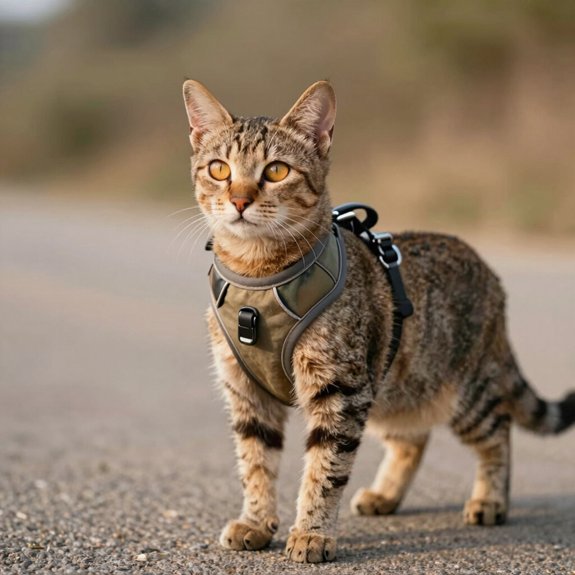
Where should you begin when it’s time to take your harness training outdoors? Start by choosing a familiar environment, like your backyard or a quiet park.
Gradually introduce your pet to new sights and sounds, ensuring they feel comfortable. Use short training sessions, maintain positive reinforcement for good behavior, and remember to keep a steady pace to build confidence and strengthen your bond during these outings.
Common Harness Training Challenges and Their Solutions
What challenges might you encounter while harness training your pet for outdoor adventures?
Here are a few common ones, along with solutions to help you succeed:
- Resistance to wearing the harness
- Pulling or lunging on the leash
- Distraction from sights, sounds, and smells
- Overheating in warm weather
- Inconsistent responses to commands
Identifying these challenges early can help you address them effectively.