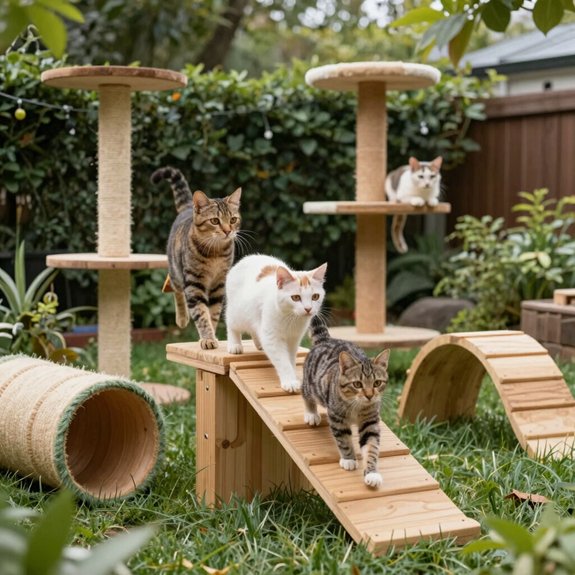
Creating a backyard cat agility course can be a fun way to keep your feline friend active and engaged. Start by selecting safe, non-toxic materials, like untreated wood and rubber surfaces, to ensure your cat’s safety.
Next, plan a varied layout with ramps, tunnels, and jumps to maintain interest. As you build your course, you’ll also want to think about how to train your cat to navigate it successfully.
Let’s explore how to make this a rewarding experience for both of you.
Getting Started: Understanding Cat Agility Courses
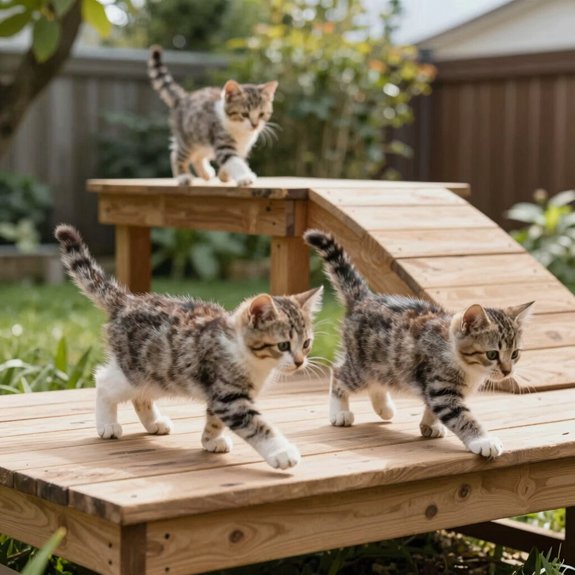
When you decide to create a backyard cat agility course, it’s important to understand what makes these courses both fun and challenging for your feline friend.
Start by considering different obstacles like tunnels, jumps, and ramps.
Cats enjoy exploring textures and heights, so varying the difficulty keeps them engaged.
Plan your layout carefully, ensuring enough space for your cat to move freely and safely.
You can also complement your agility course with window box perches to provide additional vertical enrichment and observation points for your cat.
Select Safe Materials for Your Cat Agility Course
Selecting safe materials is essential for creating a cat agility course that’s both enjoyable and secure.
You’ll want to choose items that ensure your cat’s safety:
- Non-toxic wood for structures, ensuring no harmful chemicals are present.
- Soft fabric for tunnels to prevent injuries.
- Rubber mats for surfaces, providing grip and cushioning underfoot.
These materials help create a fun environment for your feline friend. Senior cats require particular attention to safe exercise methods to prevent injury and ensure they can enjoy agility activities at their own pace.
Planning Your Course Layout
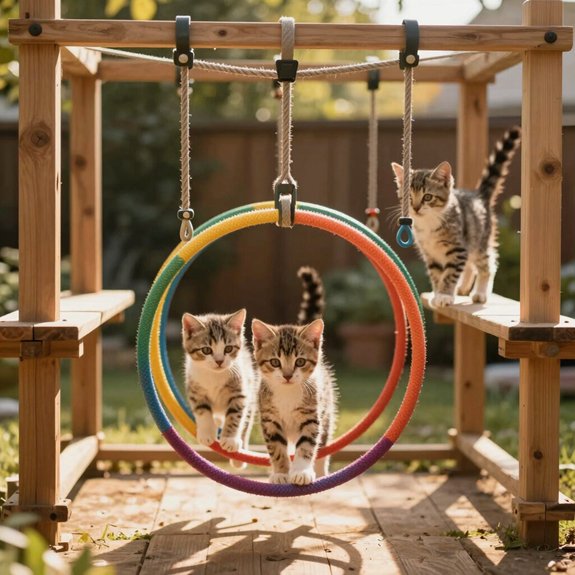
How can you design an agility course that will challenge and engage your cat?
Start by plotting out a space that allows for diverse obstacles, like ramps, tunnels, and jumps.
Keep in mind their natural behaviors and preferences.
Use simple layouts with varying heights and widths, ensuring easy transitions between obstacles.
A thoughtful design will stimulate your cat’s curiosity and encourage active play.
Incorporate moving cat toys throughout the course to maintain your cat’s interest and motivation during solo play sessions.
How to Train Your Cat for the Agility Course
Wondering how to get your cat ready for the agility course? Training your feline friend requires patience and consistency.
Start with these tips:
- *Use treats for encouragement.* Reward your cat when they approach or complete obstacles.
- *Practice basic commands.* Teach commands like “come” and “jump” to help guide them.
- *Be patient and have fun!* Engage with your cat to build confidence and cooperation.
Consider investing in specialized cat agility products designed to make training more effective and enjoyable for your pet.