Keeping your senior cat active is essential for their health and well-being. Regular movement helps maintain muscle tone and balance, which can prevent falls and injuries.
Simple activities like short walks or gentle playtime can make a big difference. Incorporating interactive toys and creating a cozy play area encourages exercise while keeping them engaged.
Want to learn specific strategies to support your senior cat’s mobility and joy? There’s much more to explore!
Discover the Benefits of Keeping Senior Cats Active

Why is it so important to keep your senior cat active? Regular exercise helps maintain their muscle tone, balance, and joint health, reducing the risk of obesity.
Engaging your cat with gentle play can also stimulate their minds, keeping them mentally sharp. Simple activities like short play sessions or interactive toys foster a playful spirit, enhancing their overall quality of life and ensuring they stay happy and engaged. Consider introducing harness training to allow your senior cat safe outdoor exploration, which provides natural enrichment and encourages movement in a controlled environment.
Create a Cozy Play Area to Encourage Exercise
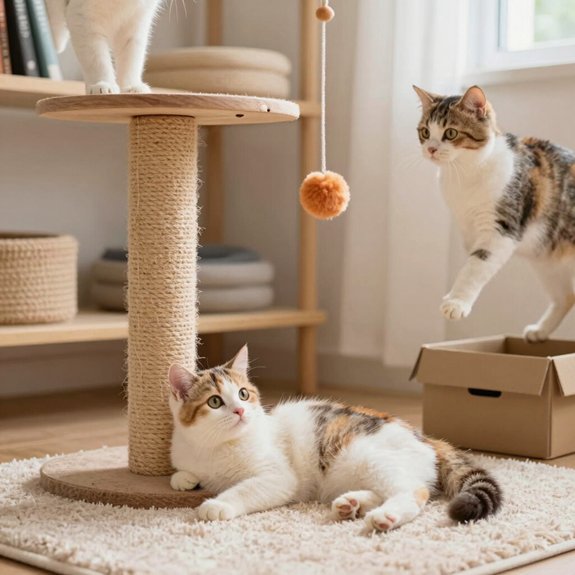
Creating a cozy play area for your senior cat can substantially motivate them to stay active. Start by selecting a quiet corner with soft bedding, cat trees, and low shelves for climbing. Incorporate gentle lighting and a few scratching posts to encourage exploration. Rotate toys regularly to keep their interest and ensure the space remains inviting, so your cat feels comfortable while staying engaged. Consider adding an enclosed cat cave bed to provide a comfortable retreat where your senior cat can rest between play sessions.
What Toys Encourage Movement in Senior Cats?
What toys can truly inspire your senior cat to get moving? Consider interactive toys like feather wands or laser pointers, which can spark their hunting instincts.
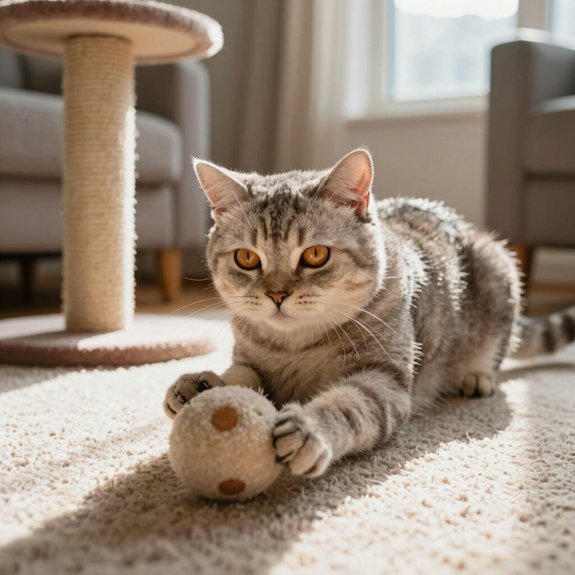
Toys that dispense treats, like puzzle feeders, encourage mental stimulation and movement. Additionally, lightweight balls or soft mice are great for gentle play. Try various options and observe what captures your cat’s interest, promoting active playtime. Make sure your senior cat has access to a comfortable extra large litter box positioned in an easily accessible location to encourage regular movement throughout your home.
Set Up a Gentle Daily Exercise Routine
Even though your senior cat may not be as spry as they once were, setting up a gentle daily exercise routine is essential for their health and well-being.
Start by adding these simple activities to their day:
- Short walks around your home.
- Gentle stretching exercises.
- Light interactive playtime with toys.
- Climbing low cat trees or stairs.
These will keep them engaged and active! Consider investing in senior-friendly climbing structures specifically designed to support older cats with reduced mobility and joint concerns.
How to Include Short Play Sessions in Your Senior Cat’s Routine

Incorporating short play sessions into your senior cat’s routine not only encourages physical activity but also stimulates their minds and strengthens your bond.
Aim for 5 to 10-minute sessions using soft toys or feather wands. Schedule these playtimes during your cat’s active hours, and rotate toys regularly to maintain interest. Keep it light and fun to guarantee your cat stays engaged and happy. Consider investing in environmental enrichment products specifically designed for senior cats to maximize the benefits of playtime and provide additional mental stimulation throughout the day.
Use Puzzle Feeders for Fun and Engagement
How can you make mealtime more stimulating for your senior cat? Using puzzle feeders is a great way to engage their minds while encouraging movement.
Here are some fun options to consider:
- Ball-shaped feeders: Roll them around to dispense treats.
- Maze feeders: Require cats to navigate and find kibble.
- Slow feeders: Promote slower eating.
- Interactive toys: Combine playtime with mealtime fun.
Encourage Safe Outdoor Exploration for Your Senior Cat
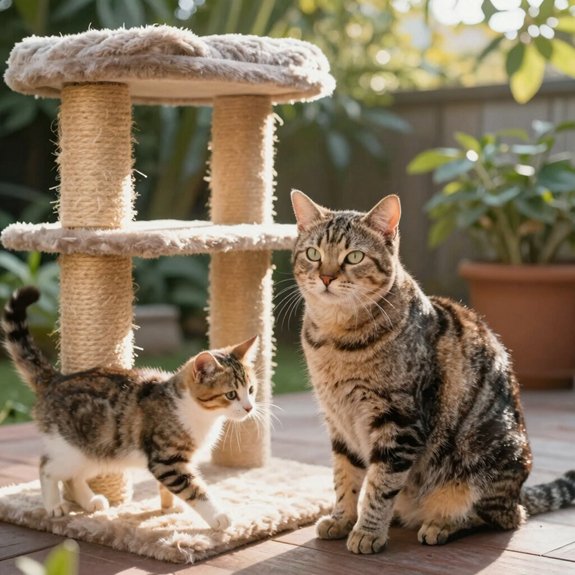
While it’s important to keep your senior cat safe at home, exploring the outdoors can provide new experiences and stimulate their senses.
Start by leash-training your cat, allowing them to explore nearby gardens or parks. Create safe outdoor spaces, like a secured patio, or consider catios.
Always supervise their time outside to ensure they don’t wander too far or encounter dangers.
Provide Climbing Structures to Satisfy Natural Instincts
Have you ever noticed how much your senior cat enjoys climbing and exploring vertical spaces?
Providing climbing structures can help satisfy their natural instincts. Consider these options to enhance your cat’s experience:
- Cat trees with multiple levels.
- Wall shelves designed for climbing.
- Cat condos with hideaways.
- Outdoor catio systems for safe exploration.
These structures encourage movement and boost their overall well-being.
How to Make Exercise a Social Activity With Companion Play

Want to keep your senior cat active while strengthening your bond? Engage in interactive playtime with toys like feather wands or laser pointers.
Invite another pet or involve family members to make playtime lively. Schedule daily sessions for consistency, and observe your cat’s preferences.
This not only stimulates their body but also nurtures social connections, making exercise enjoyable and meaningful for both of you.
How Monitoring Health Helps Keep Senior Cats Active
Monitoring your senior cat’s health plays a crucial role in keeping them active. Regular check-ups can identify issues before they become serious.
Here are four key aspects to monitor:
- Weight changes—maintain a healthy diet.
- Mobility—watch for stiffness or limping.
- Eating habits—observe any changes in appetite.
- Litter box usage—note any irregularities.
These factors contribute to your cat’s overall activity level and well-being.