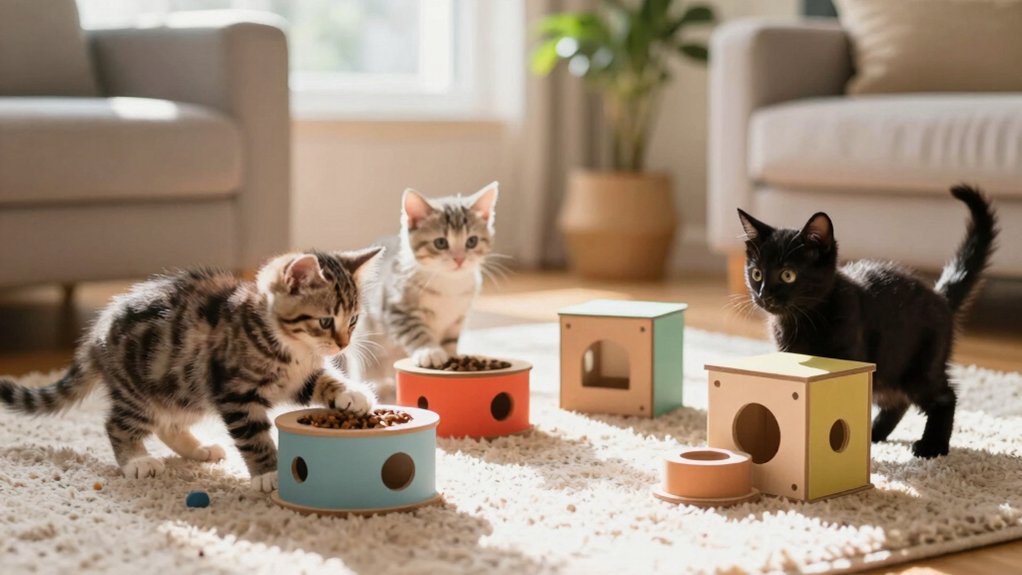
Creating DIY puzzle feeders energizes your feline by engaging their minds and encouraging play. Start with a sturdy cardboard box and cut holes for kibble. Place a small bowl inside to catch food and secure the box’s top with tape. Fill the bowl with their favorite dry food, then cover the holes lightly. For advanced designs, try using a tissue box or PVC pipe for more complex challenges. Keep your cat happy and active, and discover more creative ideas ahead!
The Importance of Puzzle Feeders for Feline Mental Stimulation
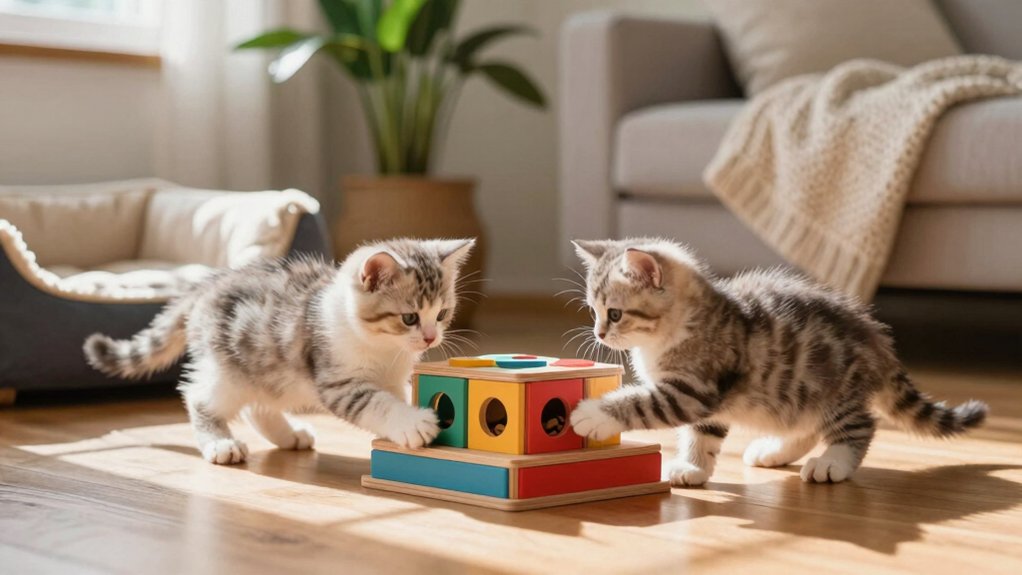
While many cat owners focus on physical play, it’s equally important to engage your feline friend’s mind, and that’s where puzzle feeders come in.
These interactive toys challenge your cat’s problem-solving skills, providing mental stimulation that can reduce boredom and stress. By hiding treats or kibble inside, you encourage your cat to think critically and explore different strategies to access the food.
For instance, some feeders require pawing, nudging, or rolling. This not only keeps them entertained but also promotes healthier eating habits—your cat will slow down and savor each bite (no more scarfing down dinner!). Additionally, puzzle feeders can help support healthy weight management by transforming mealtime into an engaging activity.
Give it a try!
Essential Materials for Crafting DIY Puzzle Feeders
Creating your own DIY puzzle feeders can be a fun and rewarding project, and you’ll need a few essential materials to get started.
First, gather sturdy containers like plastic bottles, cardboard boxes, or muffin tins. You’ll also need tools such as scissors, a drill, or a hot glue gun for assembly.
Next, consider small treats or kibble to fill your feeder. Additionally, you may want some non-toxic paint or decorations to personalize your creation (because who doesn’t love a stylish feeder?).
Finally, have a ruler handy for measuring openings to guarantee your cat can easily access the food.
Happy crafting!
Step-by-Step Guide to Making a Simple Puzzle Feeder
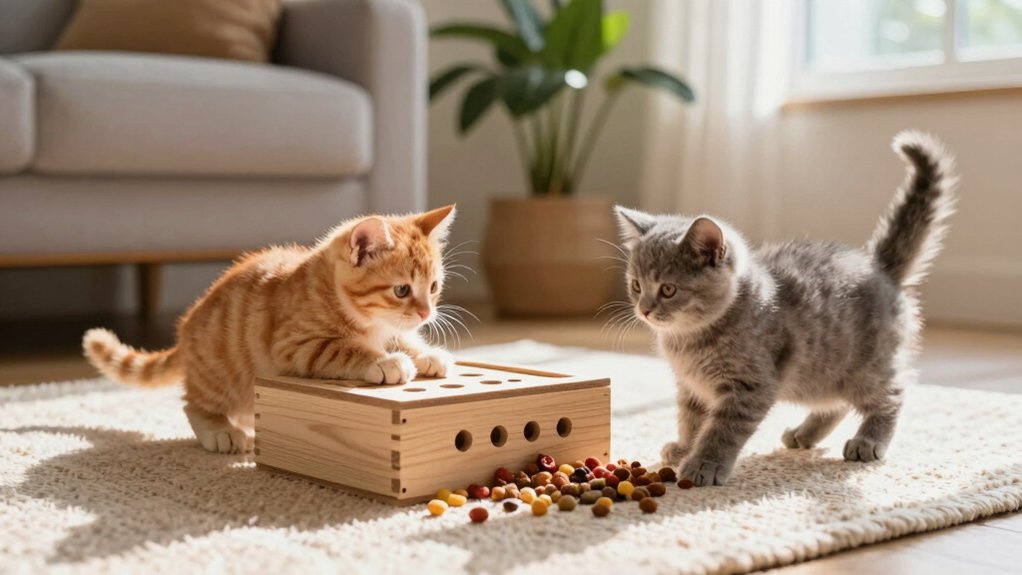
Making a simple puzzle feeder for your cat can be an enjoyable project that enhances your pet’s feeding experience. Start with a sturdy cardboard box, cutting holes large enough for kibble to fall through. Next, place a small bowl inside to catch the food. Secure the box’s top with tape to prevent spills. Fill the bowl with your cat’s favorite dry food, then cover the holes with a lightweight material like mesh or cloth. Make sure it’s easy for your cat to paw at the holes. Finally, encourage your feline friend to explore their new feeding challenge (they might just become a master forager). Additionally, using puzzle feeders can promote overall mental health and well-being in cats.
Innovative DIY Designs for Complex Puzzle Feeders
If you’re looking to take your cat’s puzzle feeder to the next level, consider creating a more complex design that challenges their instincts and keeps them engaged.
Here are three innovative ideas:
- Tissue Box Feeder: Cut holes in a tissue box, fill it with kibble, and let your cat fish for treats through the openings.
- Egg Carton Puzzle: Place kibble in the cups of an empty egg carton, then close the carton and let your cat figure out how to open it.
- PVC Pipe Maze: Create a maze using PVC pipes with holes, allowing your cat to roll a ball of treats through to retrieve their prize.
Customize Your Puzzle Feeders for Your Cat’s Unique Preferences
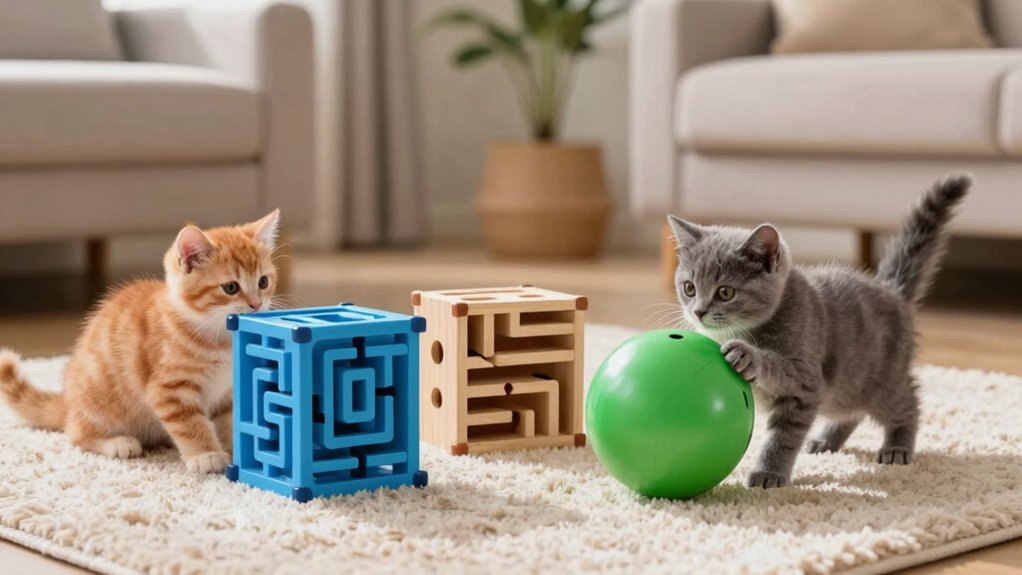
To keep your cat engaged and happy, customizing puzzle feeders to suit their unique preferences is essential.
Start by observing their play style; do they prefer pawing, nudging, or batting? Next, choose materials that match their preferences—try cardboard, plastic, or wood.
You can alter the difficulty level by changing hole sizes or adding barriers. For a treat-loving feline, fill the feeder with their favorite snacks, but remember to avoid overindulgence.
Finally, consider their size and agility when designing the feeder. A little experimentation (and maybe a few messes) will help you create the perfect puzzle feeder that keeps your cat entertained!
How to Get Your Cat Interested in Puzzle Feeders?
Getting your cat interested in puzzle feeders can be a fun and rewarding experience. Start by introducing the feeder gradually.
Here are three steps to help pique their curiosity:
- Fill with Favorites: Use treats or their favorite dry food to fill the feeder, making it more enticing.
- Playtime Connection: Engage them with the feeder during playtime. Tap or shake it to draw their attention.
- Praise and Patience: When they show interest, offer praise. Be patient; it might take time for them to get the hang of it (just like we do with new hobbies!).
Don’t Make These Common Mistakes With Puzzle Feeders
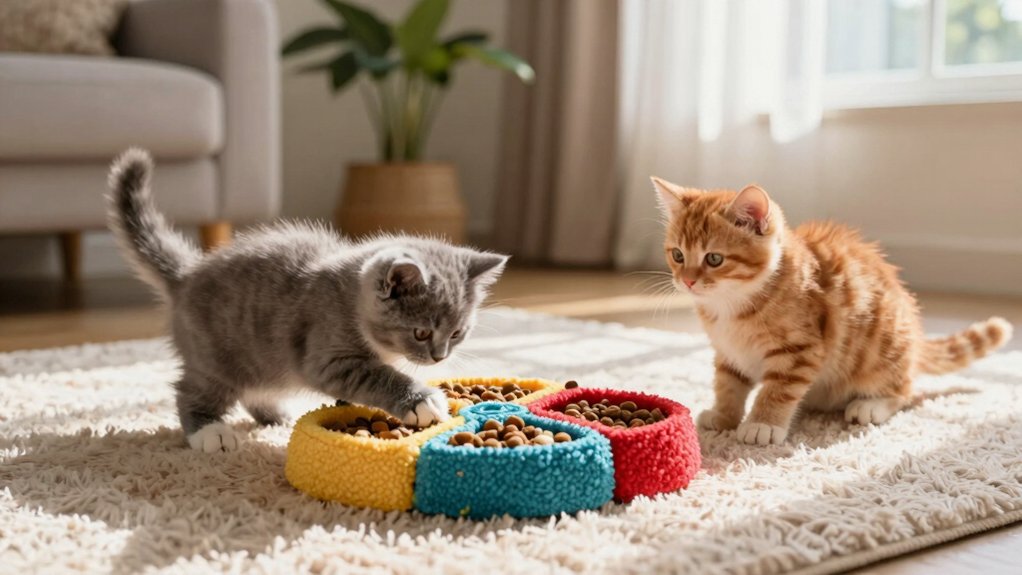
While puzzle feeders can be a fantastic way to stimulate your cat’s mind and encourage natural behaviors, there are several common mistakes you want to avoid.
First, don’t choose a feeder that’s too difficult; start with an easy one to build your cat’s confidence.
Also, avoid overfilling it; too much food can overwhelm them.
Remember to supervise your cat at first, ensuring they don’t get frustrated or give up.
Finally, don’t forget to clean the feeder regularly, as leftover food can lead to bacteria. Additionally, using engaging cat puzzle toys can enhance the experience and provide varied challenges for your feline.
Why Puzzle Feeders Are More Than Just Fun
Puzzle feeders aren’t just a source of entertainment for your cat; they serve several important purposes that contribute to your pet’s overall well-being.
Here’s why they’re beneficial:
- Mental Stimulation: Engaging your cat’s brain helps reduce boredom and anxiety, keeping them sharp and focused.
- Physical Activity: Working for their food promotes exercise, which helps maintain a healthy weight and reduces obesity risks.
- Natural Instincts: Puzzle feeders mimic hunting behavior, satisfying your cat’s instincts and making mealtime more fulfilling (no, they won’t catch mice in your kitchen). Additionally, they encourage playful dining experiences, enhancing the joy of feeding time for both you and your feline friend.
Best Practices for Cleaning Your Puzzle Feeders

To keep your cat’s puzzle feeders in top shape, regular cleaning is essential for both hygiene and function.
Start by disassembling the feeder, removing any food remnants or debris. Use warm, soapy water and a soft brush to scrub all surfaces, ensuring you reach tight corners. Rinse thoroughly to avoid soap residue, which might deter your cat.
For tougher stains, a vinegar-water solution works wonders. Let everything dry completely before reassembling.
It’s a good idea to clean your feeder weekly, or more often if it gets especially messy (cats can be messy eaters!). Keeping it clean helps maintain your cat’s interest and health.