Here are three DIY enrichment projects you can create for your cat.
- A shallow box into a puzzle feeder from a cardboard box
- Set up a scent hunt by hiding cotton balls rubbed with catnip
- Build a vertical climbing wall using sturdy wooden planks covered with sisal rope.
These projects will keep your cat happy and engaged for hours.
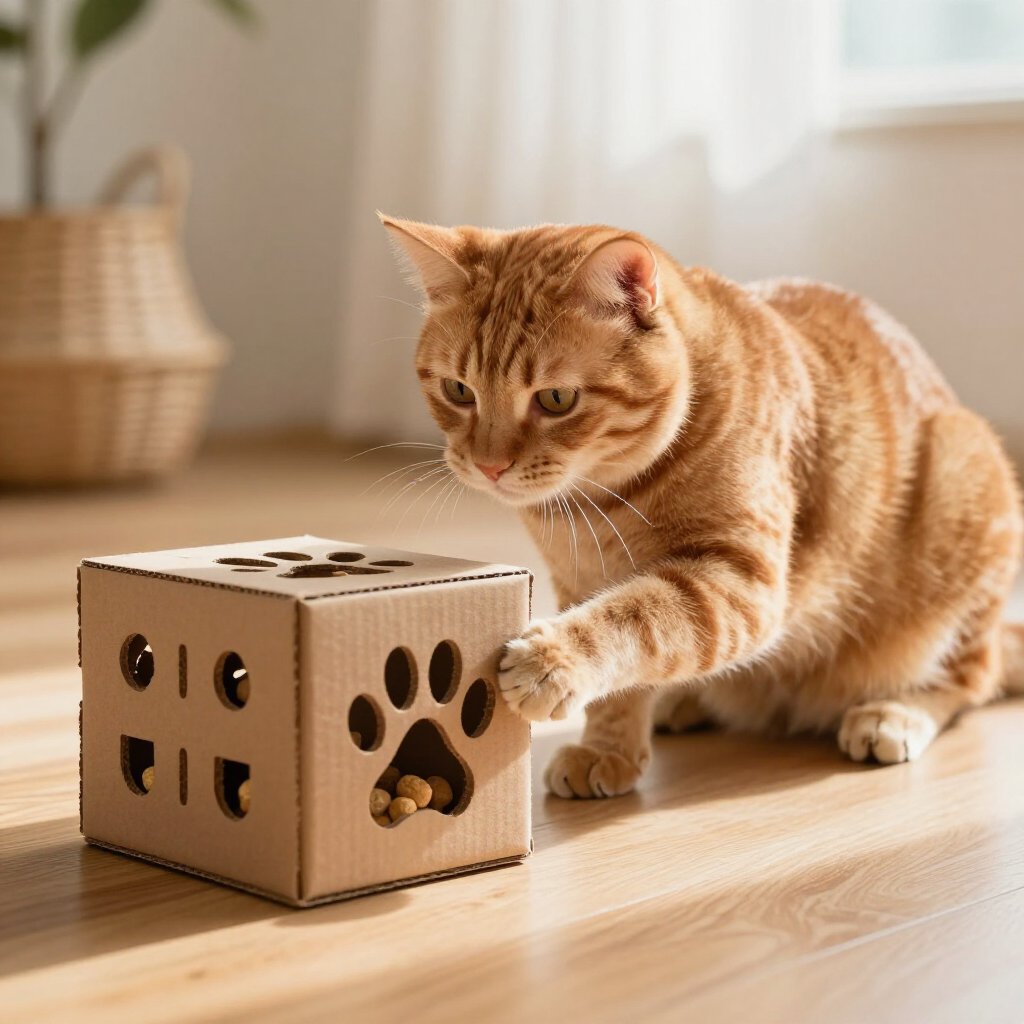
Make a Cardboard Cat Puzzle Feeder
Transforming a simple cardboard box into a puzzle feeder engages your cat’s natural hunting instincts while recycling materials you already have at home. DIY cat enrichment products can provide additional inspiration for interactive feeding solutions.
You’ll need a shallow box, scissors, and treats.
Start by cutting various sized holes in the box lid, making some slightly larger than your cat’s paw.
Place kibble or treats inside, then secure the lid with non-toxic glue.
For added challenge, tape smaller cardboard pieces inside to create tunnels and compartments.
Your cat will bat, sniff, and problem-solve to retrieve rewards.
This builds confidence, prevents destructive boredom behaviors, and strengthens your bond through daily interactive play sessions.
Set Up a Cat Scent Hunt
Your cat’s puzzle feeder builds problem-solving skills, but their nose offers another powerful pathway to mental stimulation that you can easily access at home. Discover cat scent enrichment products designed specifically to stimulate feline olfactory engagement.
Gather several cotton balls, and rub them with dried catnip, valerian root, or a tiny drop of fish oil.
Hide these scented treasures in easy spots first, like under a corner of the rug, behind a partially opened door, or tucked into a cardboard box.
As your cat’s skills improve, increase the challenge by placing scents on window sills, inside paper bags, or beneath furniture.
Always supervise sessions, and avoid essential oils, which are toxic.
Build a Vertical Cat Climbing Wall
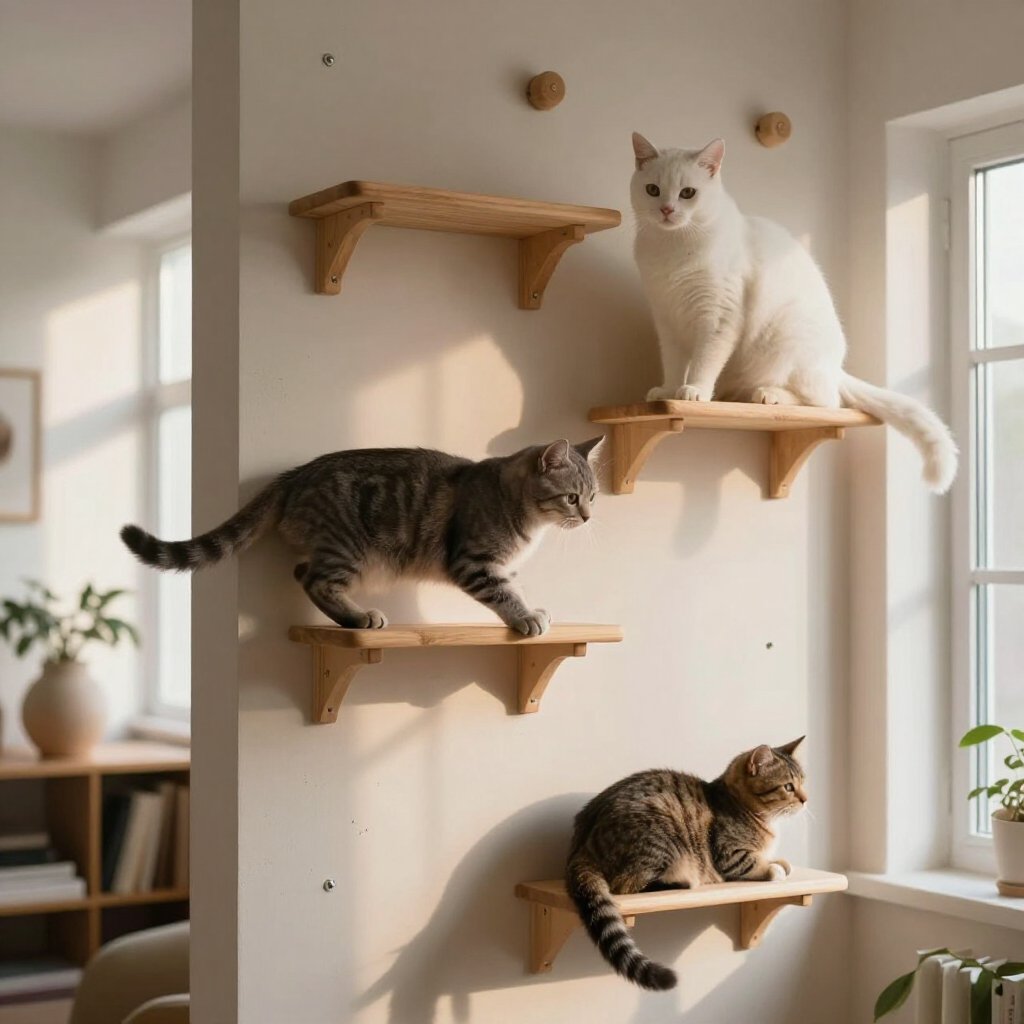
Creating a vertical climbing wall taps into your cat’s natural instinct to perch high and survey their territory. You’ll need sturdy wooden planks, carpet scraps, and heavy-duty wall anchors. Indoor cat obesity prevention can be effectively addressed through engaging vertical spaces that encourage physical activity and mental stimulation.
First, locate studs using a stud finder, then carefully mark your desired layout with pencil. Attach shelves at varying heights, ensuring each supports your cat’s weight (plus a running start).
Cover surfaces with sisal rope or very low-pile carpet for secure grip. Add a final perch near the ceiling for ultimate feline satisfaction.
Remember to incorporate resting platforms between jumps, since cats appreciate strategic pit stops during their aerial adventures.