Engaging your cat in brain games can greatly calm their anxiety. Try using puzzle feeders that hide treats, which encourage problem-solving and exploration. Make DIY games like cardboard boxes with holes for hiding and searching or egg cartons filled with treats to keep them active. Incorporate interactive toys that mimic prey movements to stimulate their hunting instincts. Regular playtime with these activities can create a focused distraction, easing your cat’s nerves. There’s more to discover on keeping your feline friend relaxed and happy.
Recognizing and Reducing Feline Anxiety
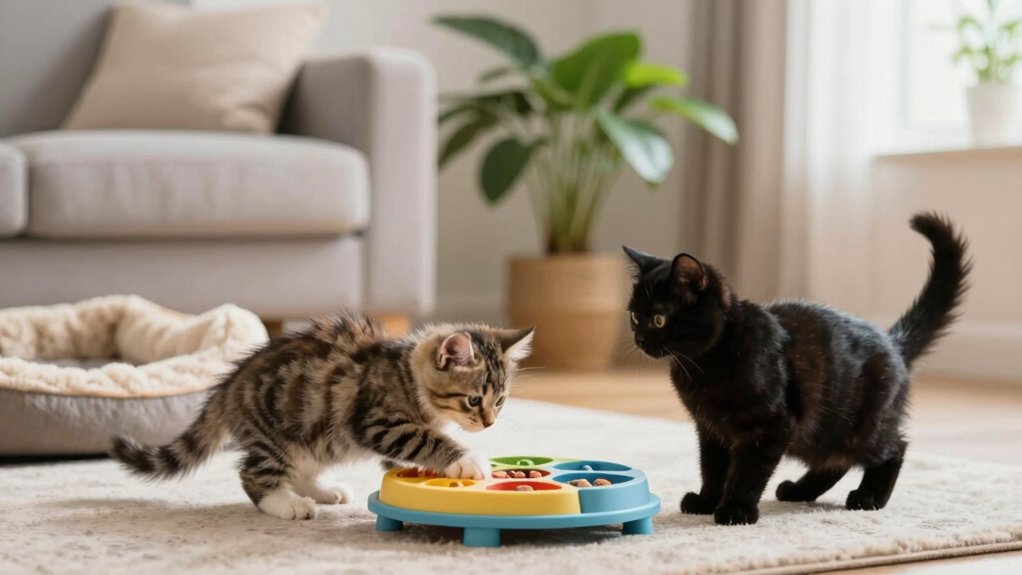
Many cat owners may not realize their furry friends can experience anxiety, just like humans.
To recognize feline anxiety, watch for signs like excessive grooming, hiding, or aggression. If your cat suddenly avoids favorite spots or seems restless, it might be stressed.
Reducing anxiety involves creating a calm environment. Try providing cozy hiding spaces or vertical perches for safety. Keep a consistent routine, including feeding and playtime, to help your cat feel secure.
You can also gently introduce relaxing products, like pheromone diffusers, to ease tension. Additionally, incorporating mental stimulation toys can help alleviate anxiety by providing engaging activities for your cat.
How Mental Stimulation Can Calm Cats
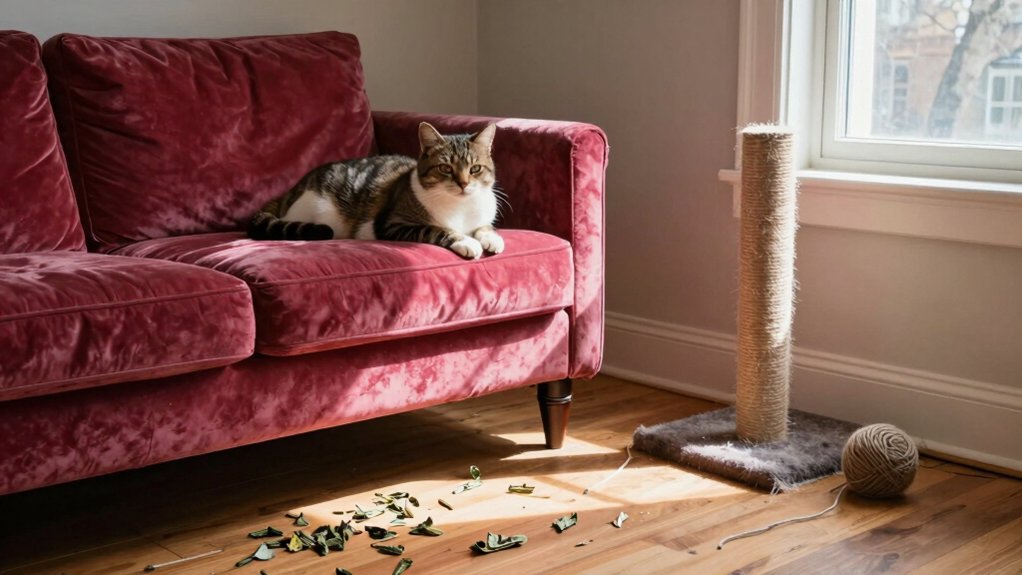
While your cat might appear relaxed lounging in a sunbeam, a lack of mental stimulation can lead to anxiety and boredom.
Engaging your cat’s mind can help soothe their nerves and promote overall well-being. Here are three effective ways to provide mental stimulation:
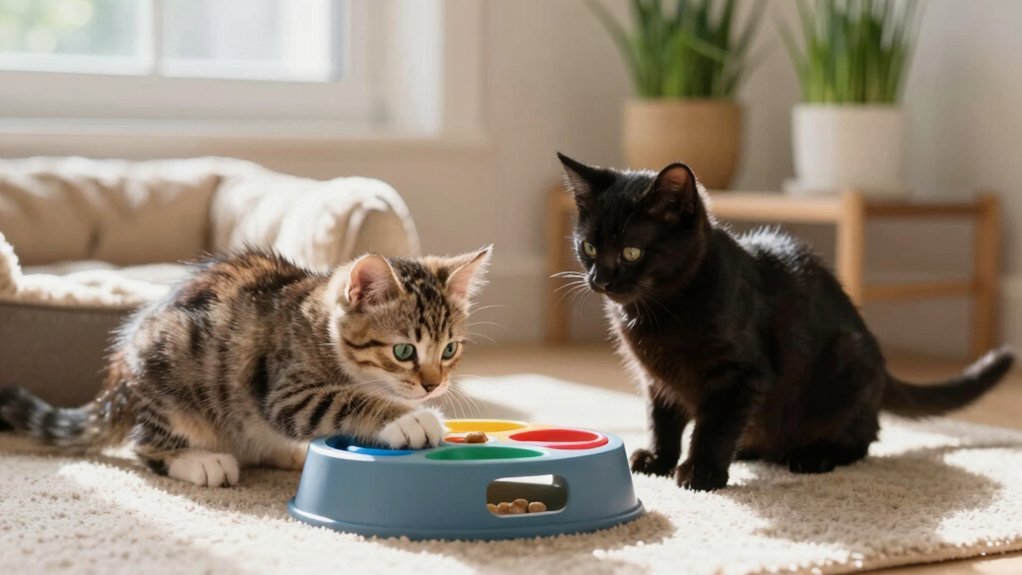
- Puzzle Feeders: These toys challenge your cat to solve problems for treats, keeping their mind sharp. Puzzle feeders with adjustable difficulty are particularly beneficial for long-term engagement.
- Interactive Play: Use wand toys or laser pointers to mimic hunting behaviors, which can reduce stress.
- Training Sessions: Teach your cat simple tricks; it’s fun for both of you and reinforces positive behaviors.
Keeping your cat mentally active is key!
Top Interactive Toys That Stimulate Your Cat’s Mind
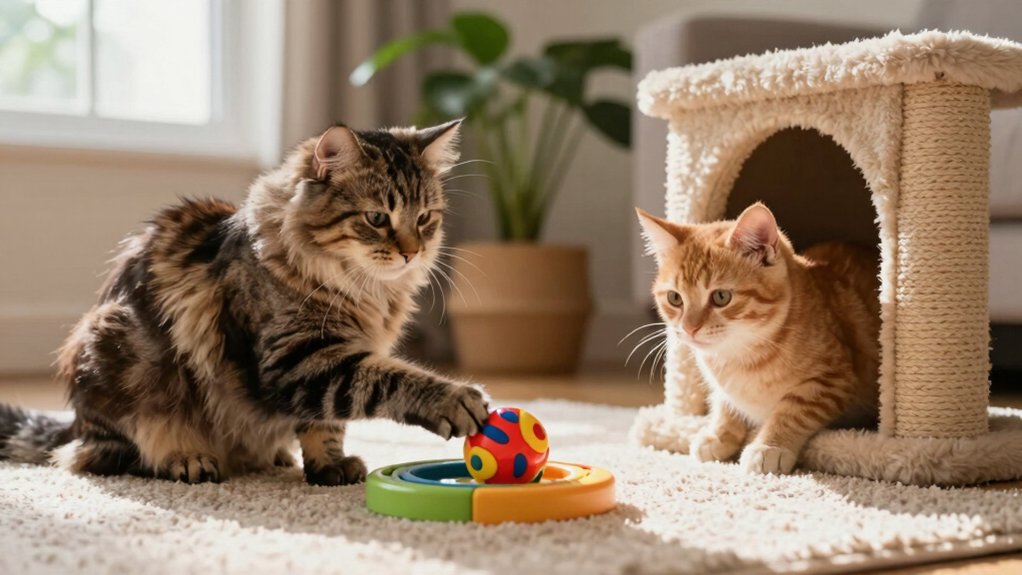
If you want to keep your cat engaged and mentally stimulated, investing in interactive toys is a great way to start.
Consider toys that mimic prey, like feather wands or laser pointers, which can entice your feline to pounce and chase.
Puzzle toys that hide treats challenge their problem-solving skills, encouraging exploration and play.
Battery-operated toys that move unpredictably can also capture their attention.
Don’t forget about interactive cat apps designed for tablets—many cats love swatting at digital mice! Additionally, look for toys that offer variable speeds to keep your cat actively engaged and entertained.
Best Puzzle Feeders for Engaging Cat Problem-Solving
When it comes to keeping your cat mentally sharp, puzzle feeders offer an excellent way to engage their problem-solving instincts. These feeders not only slow down their eating but also provide mental stimulation. Cat puzzle feeders can also help reduce anxiety by giving your feline a constructive outlet for their energy. Here are three of the best options to evaluate:
- PetSafe SlimCat Interactive Feeder: This ball-shaped feeder encourages your cat to roll it around to dispense food.
- Trixie Cat Activity Fun Board: This board features various compartments and puzzles for your cat to explore and solve.
- Outward Hound Hide-A-Squirrel Puzzle Toy: It combines play with feeding, hiding treats inside plush toys for extra fun.
Try one and watch your cat thrive!
Easy DIY Brain Games to Make for Your Cat
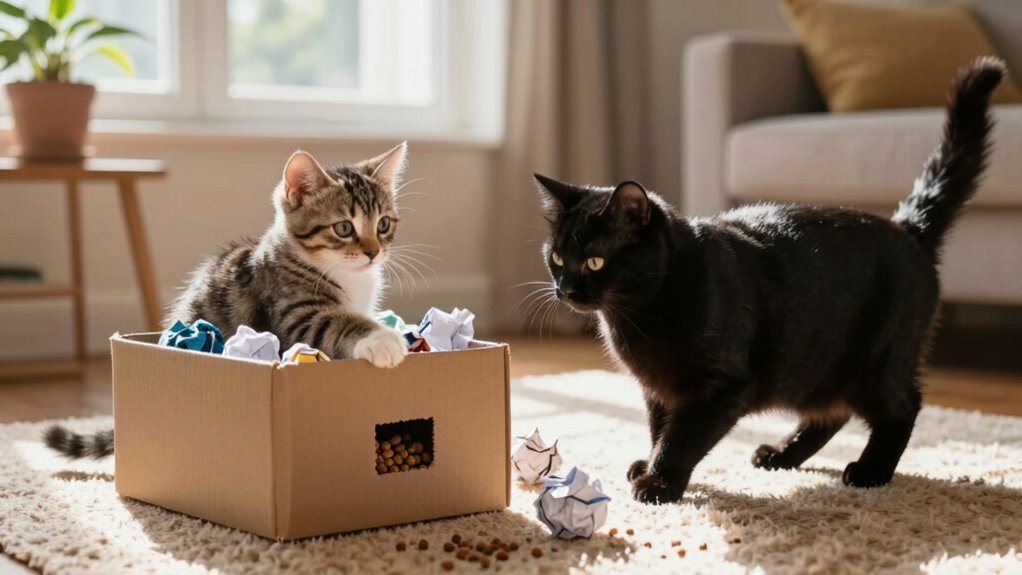
Creating easy DIY brain games for your cat can be a fun way to enhance their mental stimulation without spending a fortune.
Start with a simple cardboard box; cut holes in the sides, then fill it with crumpled paper and toys for your cat to explore.
Another option is to use an egg carton; just place treats in some compartments, and let your cat figure out how to get them.
You can also create a feather wand using a stick and string. Just attach feathers, and watch your cat happily chase!
These activities encourage problem-solving while keeping your feline entertained and engaged.
Measuring Your Cat’s Response to Brain Games?
To effectively measure your cat’s response to brain games, you’ll want to observe their behavior and engagement levels during playtime.
Look for signs that show whether they enjoy the activity or not. Here are three key indicators to assess:
- Play Duration: Observe how long your cat engages with the game. Longer play times often indicate higher interest.
- Body Language: Watch for relaxed ears and a playful posture; these often signal enjoyment.
- Vocalizations: Listen for purring or chirping, as these sounds can suggest excitement and contentment.