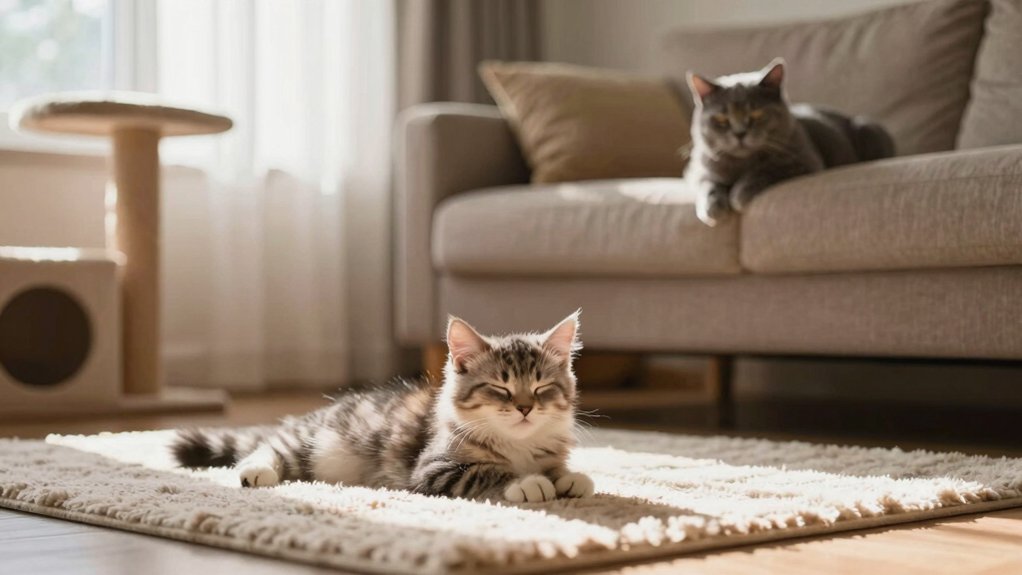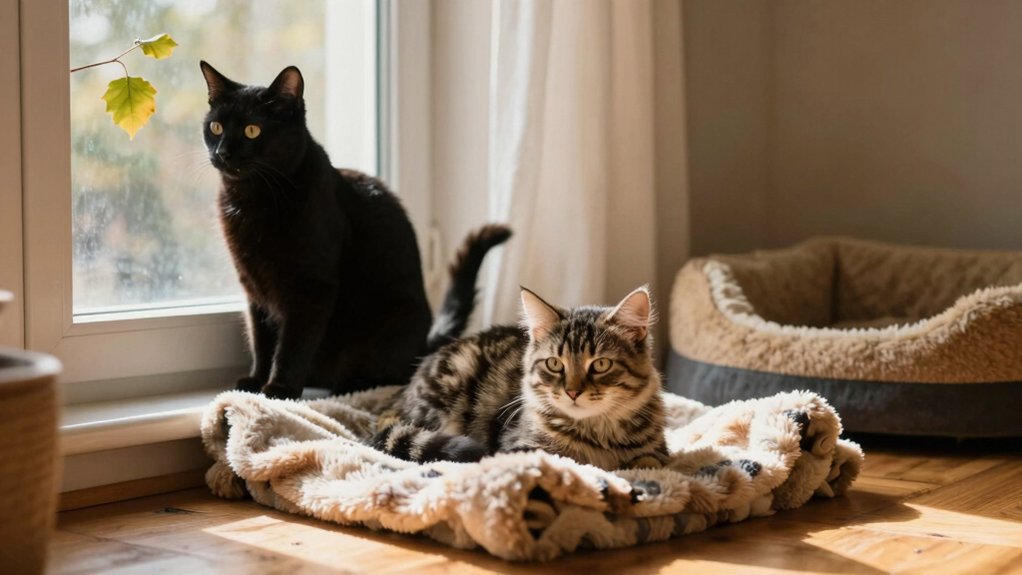
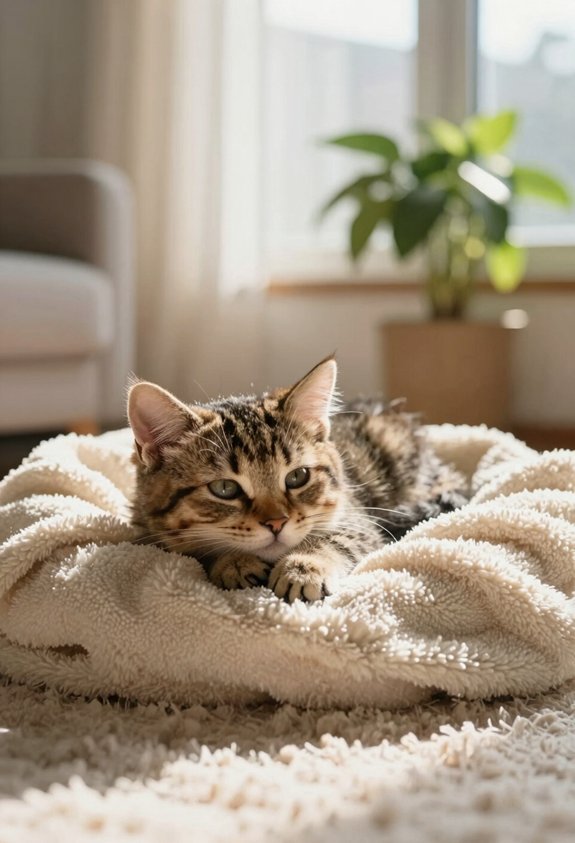
To optimize your active cat’s sleep schedule, start by creating a cozy sleep space with soft bedding and a quiet location. Establish a consistent bedtime, and engage in regular playtime to help them expend energy. Maintain a peaceful environment during nap times, reducing noise and distractions. Consider natural calming aids, like pheromone diffusers. If you notice any sudden changes in sleep patterns, don’t hesitate to consult a veterinarian for tailored advice. More tips can help keep your cat well-rested and happy.
Why Your Active Cat Needs a Good Sleep Schedule
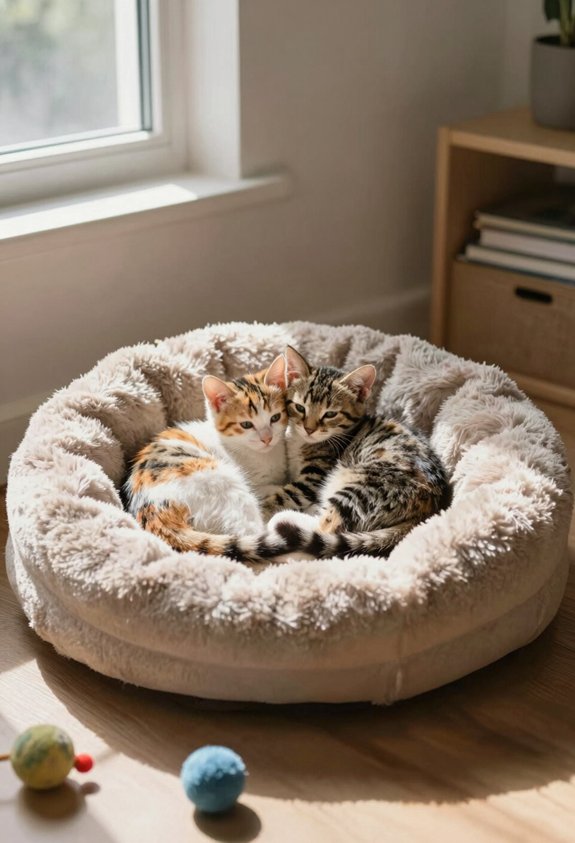
While you might think your active cat can thrive on just a few hours of sleep, the truth is that a good sleep schedule is essential for their health and well-being.
Cats typically need 12 to 16 hours of sleep daily, which helps them recharge their energy for those playful bursts. If your cat doesn’t get enough rest, you may notice behavioral issues, like irritability or excessive meowing. Providing a comfortable resting place, such as an orthopedic cat bed, can significantly enhance their sleep quality.
Establishing a routine can help, so consider setting regular playtimes to tire them out. A well-rested cat is more likely to be happy and healthy, ready to tackle their next adventure!
Create a Cozy Sleep Space for Your Cat
Creating a cozy sleep space for your cat can greatly enhance their quality of rest and overall happiness.
Start by choosing a quiet area, away from noisy activities, and place a soft bed or blanket there. Consider using a cat cave or a cushioned basket, as cats love enclosed spaces. A cozy cat cave can provide a sense of security for your feline friend, making it an ideal sleeping option.
Adding a few of their favorite toys nearby can also help. Make certain the space is warm, but not too hot; a heated pad might be a nice touch (just don’t let it turn into a sauna!).
Finally, keep the bed clean and fresh to encourage your cat to snuggle in and enjoy their naps.
Establish a Consistent Routine for Better Cat Sleep
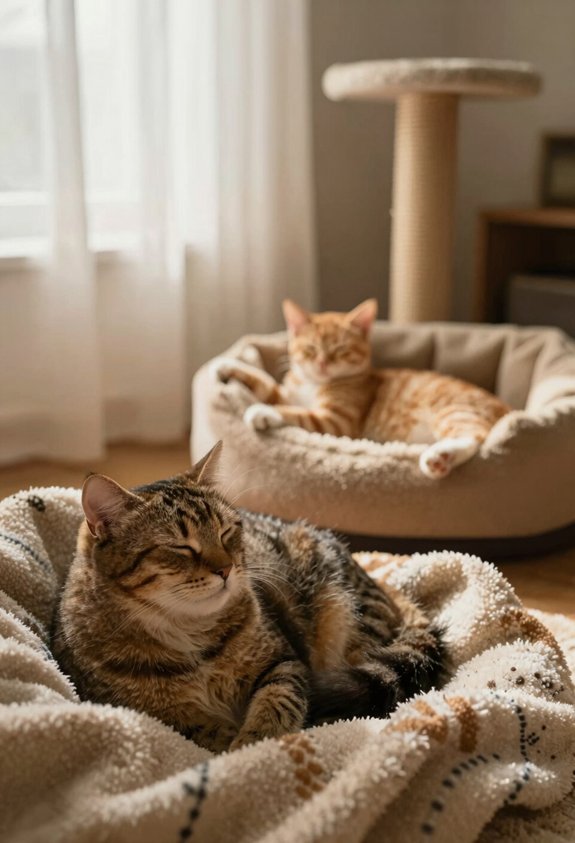
A cozy sleep space sets the stage, but establishing a consistent routine takes your cat’s sleep to the next level.
Start by setting a regular bedtime, encouraging your cat to settle down at the same time each night. Feed them dinner a few hours before, as a full belly often promotes sleep.
You can also incorporate calming activities, like gentle petting or soft music, to signal bedtime. Keep noise and distractions minimal during this time, so your cat associates the routine with relaxation.
Additionally, providing a cozy heated cat bed can enhance your cat’s comfort and support better sleep.
Consistency is key, and with your help, your cat will soon enjoy deeper, more restful sleep.
Encourage Playtime to Manage Energy Levels
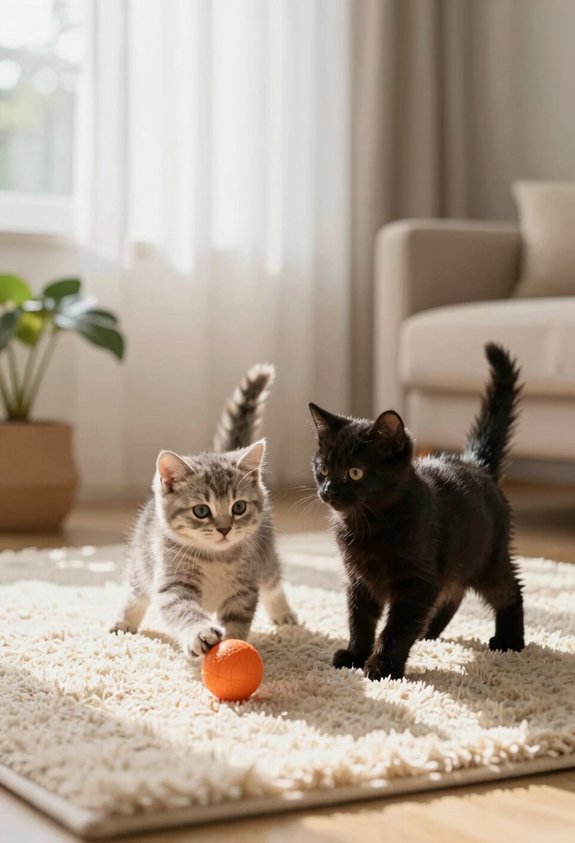
To help your cat get the sleep they need, it’s essential to encourage playtime during the day to manage their energy levels. Engaging in regular play sessions can help tire them out, making it easier for them to sleep at night.
Here are some fun ways to incorporate play:
- Use interactive toys, like feather wands or laser pointers, to stimulate their hunting instincts.
- Set aside dedicated time each day for play, ideally in the morning or early afternoon.
- Rotate toys frequently to keep their interest piqued and encourage more active play.
Incorporating cat puzzle toys into playtime can also provide mental stimulation and further help expend their energy.
A well-exercised cat is a happy cat—trust me!
Keep the Peace During Your Cat’s Nap Time
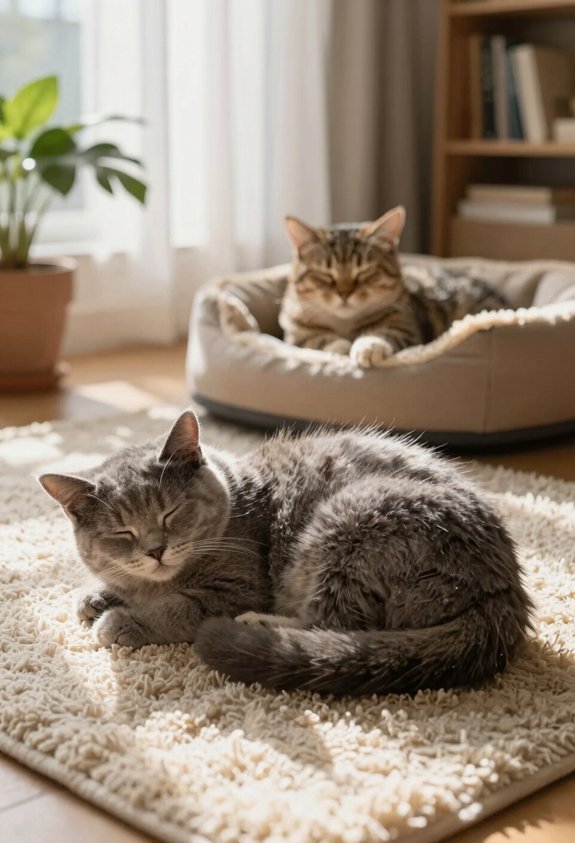
While your cat might seem like a professional napper, ensuring they get uninterrupted rest is essential for their health and well-being.
To keep the peace during nap time, designate a quiet area free from loud noises and distractions. Close windows to block outside sounds, and consider soft music or white noise to mask sudden disruptions.
If you have other pets, try to keep them occupied with toys or treats while your cat sleeps.
Finally, establish a consistent nap schedule; this helps your cat anticipate rest periods, making it easier for everyone to respect their downtime (and maybe catch a nap yourself!).
Natural Calming Aids for Relaxed Sleep
Creating a tranquil environment for your cat during nap time is just one part of the equation; natural calming aids can enhance their sleep quality considerably.
You can try these options to help your furry friend relax:
- Catnip: Many cats respond positively to catnip, which can induce a state of calm and help them settle down.
- Herbal Remedies: Consider using chamomile or valerian root, which are known for their soothing properties and can be safe for cats.
- Calming Sprays: Products containing pheromones can create a comforting atmosphere, encouraging your cat to unwind and sleep peacefully.
With a little effort, you can promote your cat’s restful slumber!
Consult a Veterinarian for Sleep Concerns?
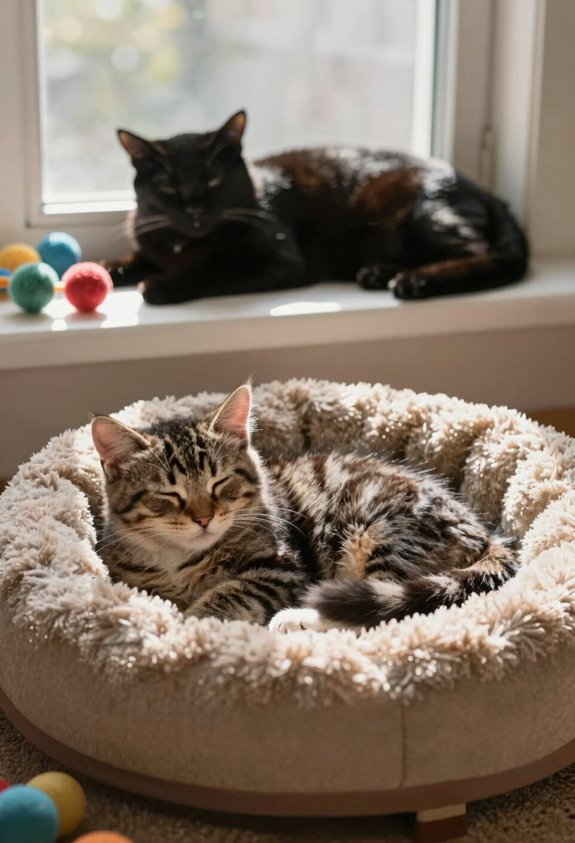
If you’re noticing changes in your cat’s sleep patterns, it might be time to consult a veterinarian about your concerns.
Sudden shifts, like increased restlessness or excessive sleeping, can indicate underlying health issues. Keep track of your cat’s behavior, noting any changes in appetite, energy levels, or litter box habits.
Your vet may suggest a thorough examination, blood tests, or even behavioral assessments to identify potential problems. They can offer tailored advice on improving your cat’s sleep quality, which might include dietary changes or environmental adjustments. Additionally, consider incorporating high-quality wet cat food into your cat’s diet, as it can play a crucial role in their overall health and well-being.