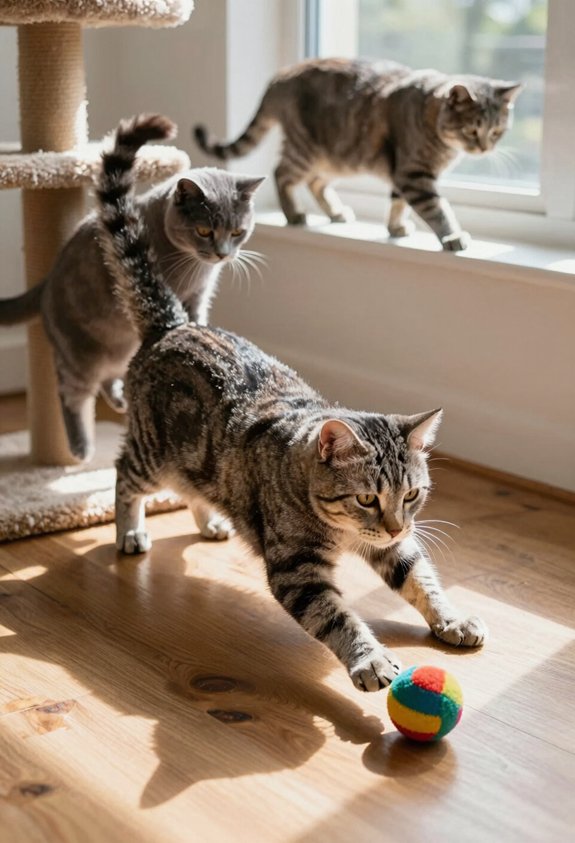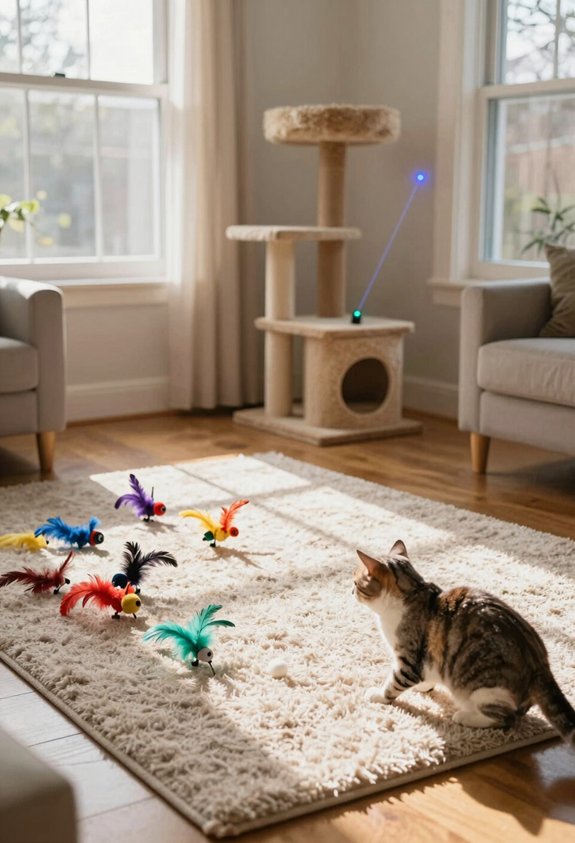
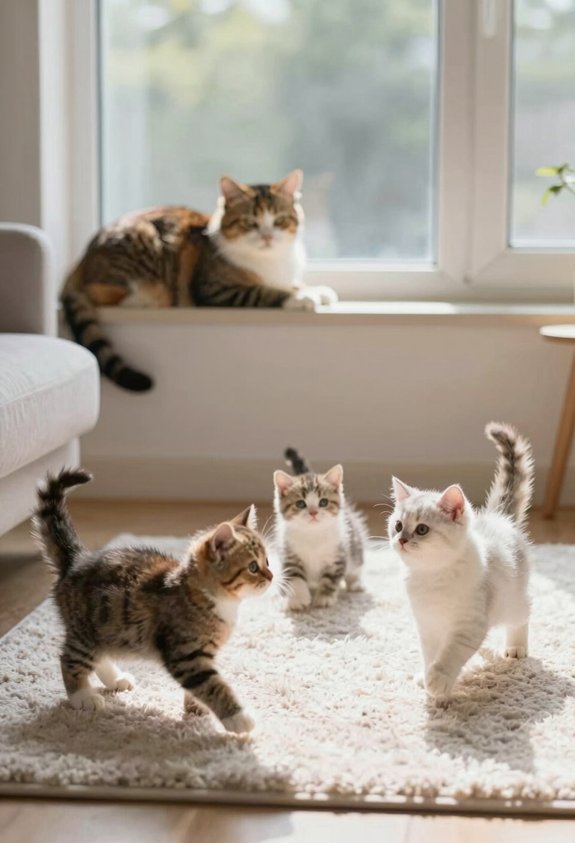
Understanding your cat’s life stage is key for effective exercise. For young adults (1-5 years), aim for 30 to 60 minutes of daily play with interactive toys. Middle-aged cats (6-10 years) thrive on shorter, more frequent sessions, so consider obstacle courses or gentle fetch games. Senior cats need brief, engaging playtime with feather wands or treat-dispensing toys to keep them active. Recognizing signs of needing more or less exercise will guarantee a happy, healthy kitty (and you’ll both stay entertained).
Why Understanding Your Cat’s Life Stage Is Essential for Tailored Exercise
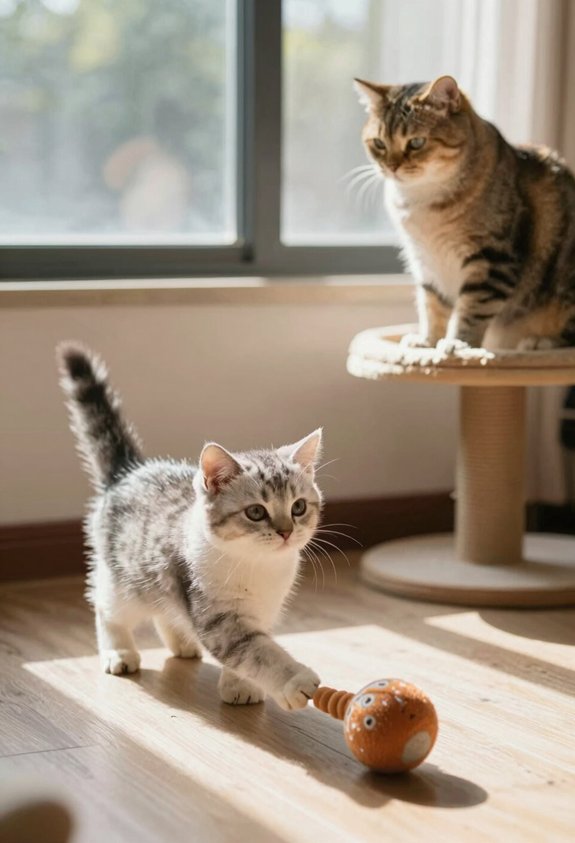
Understanding your cat’s life stage is essential for crafting an effective exercise routine that meets their specific needs. Kittens require playful, interactive sessions to develop coordination, while mature cats benefit from moderate activity to maintain health.
You should consider age-appropriate toys, like feather wands for young cats or puzzle feeders for older ones. Additionally, older cats may prefer shorter, gentler playtimes to prevent fatigue. Incorporating toys with adjustable difficulty levels can further enhance your cat’s engagement during exercise.
Observing your cat’s behavior and adjusting activities accordingly guarantees you’re keeping them engaged. Remember, a well-tailored exercise plan not only keeps your cat fit but can also enhance their happiness (and yours). It’s a win-win!
Exercise Requirements for Young Adult Cats (1-5 Years)
Young adult cats, typically aged 1 to 5 years, have a lot of energy and curiosity, making it essential to provide them with a well-structured exercise routine.
Aim for at least 30 to 60 minutes of play each day. Incorporate interactive toys, like feather wands or laser pointers, to engage their hunting instincts. Interactive cat toys can also enhance their physical activity and keep them entertained for longer periods. Puzzle feeders can stimulate their minds while encouraging physical activity. Additionally, consider setting up climbing structures or cat trees for vertical exploration.
Don’t forget to rotate toys regularly to keep things fresh, as they can get bored quickly (like humans at a long meeting).
Your cat will thrive!
Activity Tips for Middle-Aged Cats (6-10 Years)
As cats move into their middle-aged years, typically between 6 to 10 years, their activity levels may begin to decrease.
To keep your feline friend healthy, incorporate shorter, more frequent play sessions. Use interactive toys, like feather wands or laser pointers, to stimulate their natural hunting instincts. You can also create obstacle courses with cushions and boxes, encouraging exploration and agility.
Consider gentle exercises, such as slow-paced fetch or light climbing. Monitor their weight and adjust food portions if necessary.
Finally, engage in quiet cuddle time—it’s not just relaxing, it also strengthens your bond (and who doesn’t love a good snuggle?).
Senior Cat Exercise Needs: Tips for Engagement
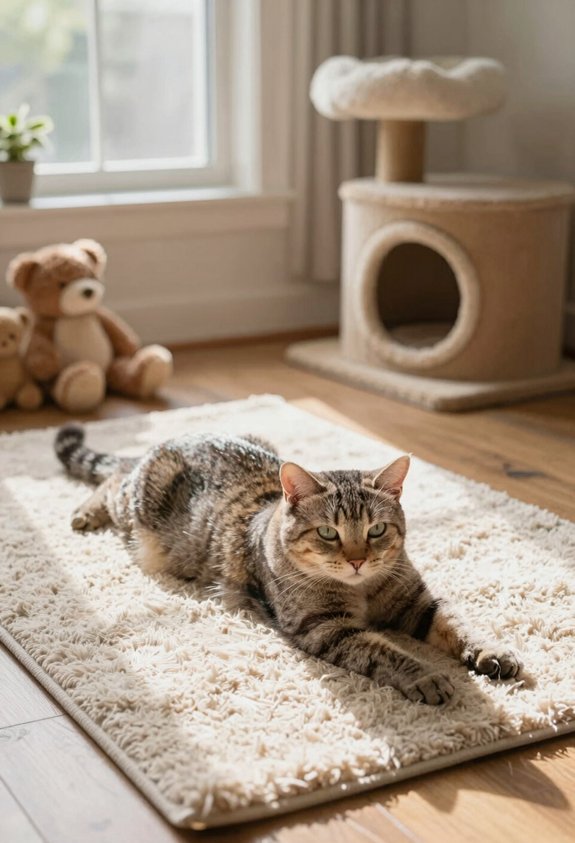
While many senior cats may not have the same energy levels they once did, keeping them active is essential for their health and well-being.
Engage your cat with short play sessions using feather wands or laser pointers, which can stimulate their hunting instincts. Consider interactive toys that dispense treats, encouraging them to move and think.
Simple obstacle courses made from household items can also provide fun challenges. Finally, incorporate gentle stretching or massage to keep their muscles flexible.
How to Recognize When Your Cat Needs More or Less Exercise?
Determining how much exercise your cat needs can be tricky, especially since their energy levels may fluctuate.
Watch for signs like excessive sleeping, weight gain, or boredom, which indicate they might need more activity. Conversely, if your cat seems restless, overly hyper, or destructive, they may require less stimulation.
You can also observe their behavior during playtime; if they tire quickly, it may mean they’re not getting enough exercise.
Additionally, monitor their interest in toys or activities—if they suddenly lose interest, it could signal that their exercise routine needs adjustment (or maybe they just want to nap instead!).
Fun Activities for Cats of All Ages
Cats of all ages can enjoy a variety of fun activities that keep them engaged and healthy. You can set up a simple play area with toys like feather wands, laser pointers, or balls. Engaging in interactive play for about 15 minutes daily keeps their minds sharp and bodies active.
Create puzzle feeders to stimulate their hunting instincts while rewarding them with treats. Puzzle feeders can also help prevent obesity by encouraging slower eating habits. For calmer moments, consider a cozy window perch for bird-watching or a cardboard box for exploration (cats love boxes!).
Rotate toys regularly to maintain interest, and remember, quality time together strengthens your bond while keeping your feline friend happy!