To help your energetic cat sleep better at night, focus on their playtime during the day. Active play, like chasing feather wands or laser pointers, allows them to expend energy.
Structured sessions, lasting about 20 minutes, can lead to deeper sleep later on. Recognizing signs of sleep deprivation is essential, as is establishing a routine that combines fun and physical activity.
Let’s explore the various ways you can create an effective play routine for your cat.
Why Active Play Is Essential for Cats
Have you ever wondered why your cat seems so energetic during the day but struggles to settle down at night?
Engaging in active play helps channel this energy effectively. Use toys like feather wands or laser pointers for interactive sessions, encouraging your cat to run and pounce. Consistent playtime not only stimulates their mind but also promotes a healthy sleep routine, making nighttime calmer. Consider complementing these play sessions with stylish cat wall shelves that provide vertical spaces for climbing and perching, which naturally encourages the active movement cats need for better sleep.
Understanding a Cat’s Sleep Cycle
How does a cat’s sleep cycle work? Cats experience two main sleep stages: light sleep and deep sleep.
During light sleep, which can last around 15 minutes, they might twitch or move.
Deep sleep follows, typically for about 30 minutes, allowing them to restore energy.
Understanding these patterns helps you create an environment that encourages better rest, improving your cat’s nighttime behavior considerably. Incorporating interactive play sessions during the day can significantly enhance your cat’s sleep quality at night.
How Active Play Promotes Better Sleep for Cats
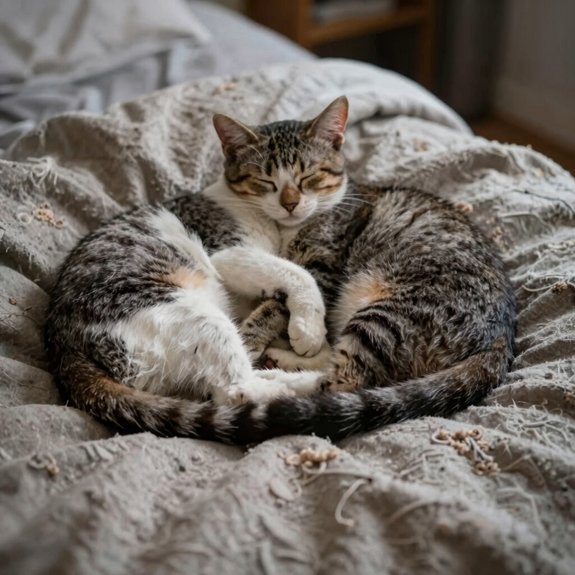
Engaging your cat in active play not only entertains them but also sets the stage for a restful night’s sleep. Activities like chasing feather toys or laser pointers stimulate your cat’s mind and body.
Aim for at least 20 minutes of vigorous play each day, allowing your feline friend to expend energy. A tired cat tends to settle down quicker and sleep more soundly. Selecting age appropriate toys ensures your cat remains engaged and motivated during these crucial play sessions.
Signs Your Cat Is Sleep-Deprived
What signs can indicate your cat is sleep-deprived? You might notice changes in behavior that suggest your furry friend needs more rest.
Watch for these signs:
- Increased irritability or aggression during playtime.
- Excessive vocalization, indicating distress or frustration.
- A lack of energy or reluctance to engage in activities they usually enjoy.
These signs can help you ensure your cat gets the sleep they need. A sleep-deprived cat may also show less interest in outdoor adventures, which is essential for their physical and mental well-being.
Fun Games to Encourage Active Play in Your Cat
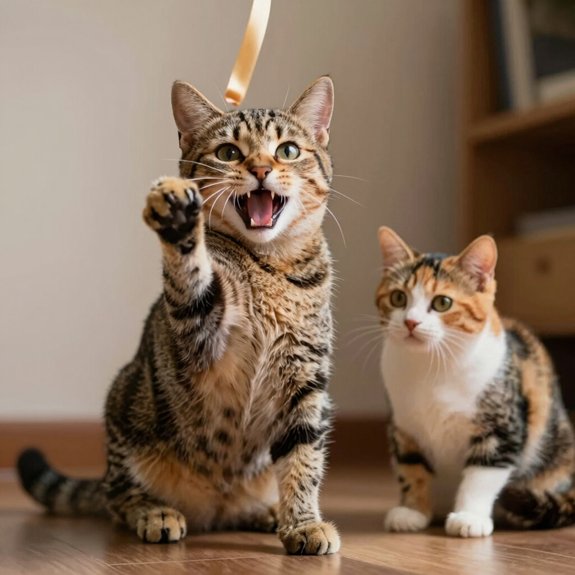
Do you ever wonder how to keep your cat happily engaged while promoting an active lifestyle? Try interactive toys, like feather wands or laser pointers.
These encourage your cat to leap and pounce.
Create obstacle courses using household items, allowing them to climb and explore.
Schedule play sessions daily; consistency helps build energy and excitement, making active play a fun routine for both of you.
Consider providing outdoor cat shelters in your yard where your cat can rest and recover after active play sessions.
Why Your Cat’s Environment Matters
Have you considered how your cat’s environment impacts their sleep and overall well-being?
A safe, stimulating space helps your cat feel secure and relaxed. Here are three essential elements to focus on:
- Comfortable resting spots: Ensure cozy, private areas for your cat to nap.
- Engaging toys: Provide various playthings to keep them active.
- Safe perches: Create spots where they can observe their surroundings.
How Play Reduces Your Cat’s Stress
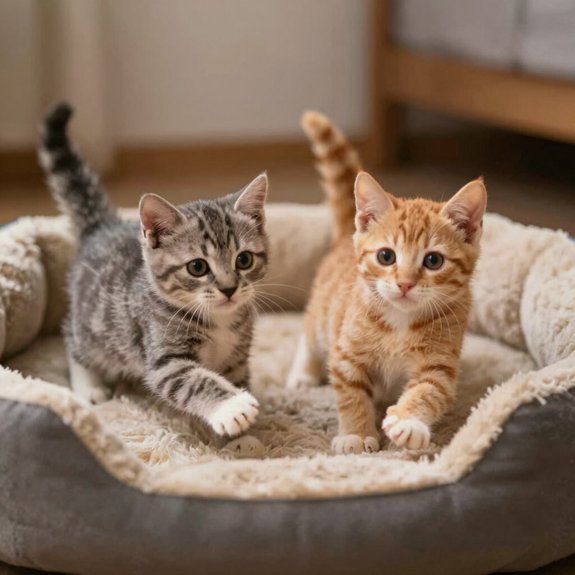
While it may seem like playtime is just for fun, engaging in regular play can dramatically reduce your cat’s stress levels.
Activities like chasing feather toys or pouncing on laser dots stimulate their mind and body.
These interactions release endorphins, promoting relaxation afterward.
To get started, set aside 10-15 minutes a day for interactive play, helping your feline friend decompress and feel more secure.
The Impact of Weight on Your Cat’s Sleep
How much does your cat’s weight impact its sleep quality? A cat’s weight can noticeably affect how well it sleeps at night.
Consider these points:
- Heavier cats may struggle to find comfortable sleeping positions.
- Excess weight can lead to health issues, causing restless nights.
- Maintaining a healthy weight promotes better energy and reduces sleep disturbances.
Your cat’s well-being ties closely to its sleep quality!
Tips for Creating a Play Routine for Your Cat
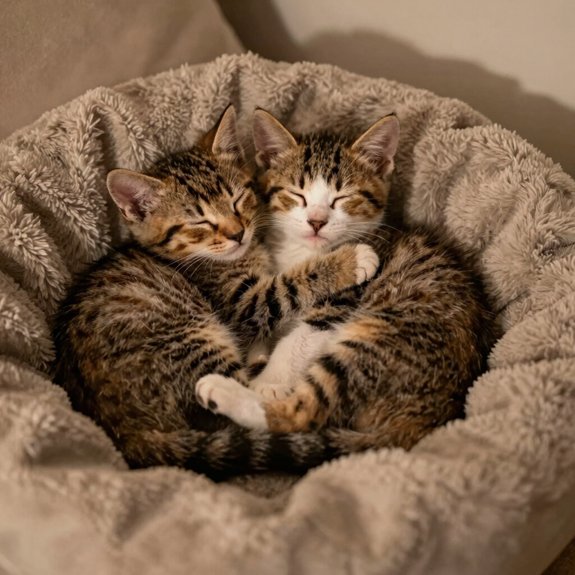
What steps can you take to establish an engaging play routine for your cat? First, set a specific time each day for play, ideally when you’re both free from distractions.
Next, explore different activities like chasing, hiding treats, or interactive puzzles. Rotate toys regularly to maintain your cat’s interest.
Finally, observe your cat’s preferences and adjust the routine to keep it fun and engaging for them.
Selecting the Best Toys for Active Play
After establishing a regular play routine for your cat, it’s important to choose the right toys that promote active play and keep your cat engaged.
Consider these options:
- Wand Toys – They encourage jumping and pouncing, simulating hunting instincts.
- Interactive Balls – Rolling or bouncing, they inspire chasing and agility.
- Puzzle Toys – These stimulate mental engagement while rewarding active play.
Select wisely for a happier, healthier cat!