Your active cat needs about twelve to fourteen hours of sleep per day, split into four to six naps. To measure this, track nap lengths over several days, log uninterrupted sleep and note responsiveness when you rouse them. Help them sleep by giving two twenty minute play sessions, small late meal, dim lights, and a warm bed. You’ll find practical tips for tracking naps, scheduling play, spotting concerning changes, and when to consult a veterinarian.
How Much Sleep Do Active Cats Need?
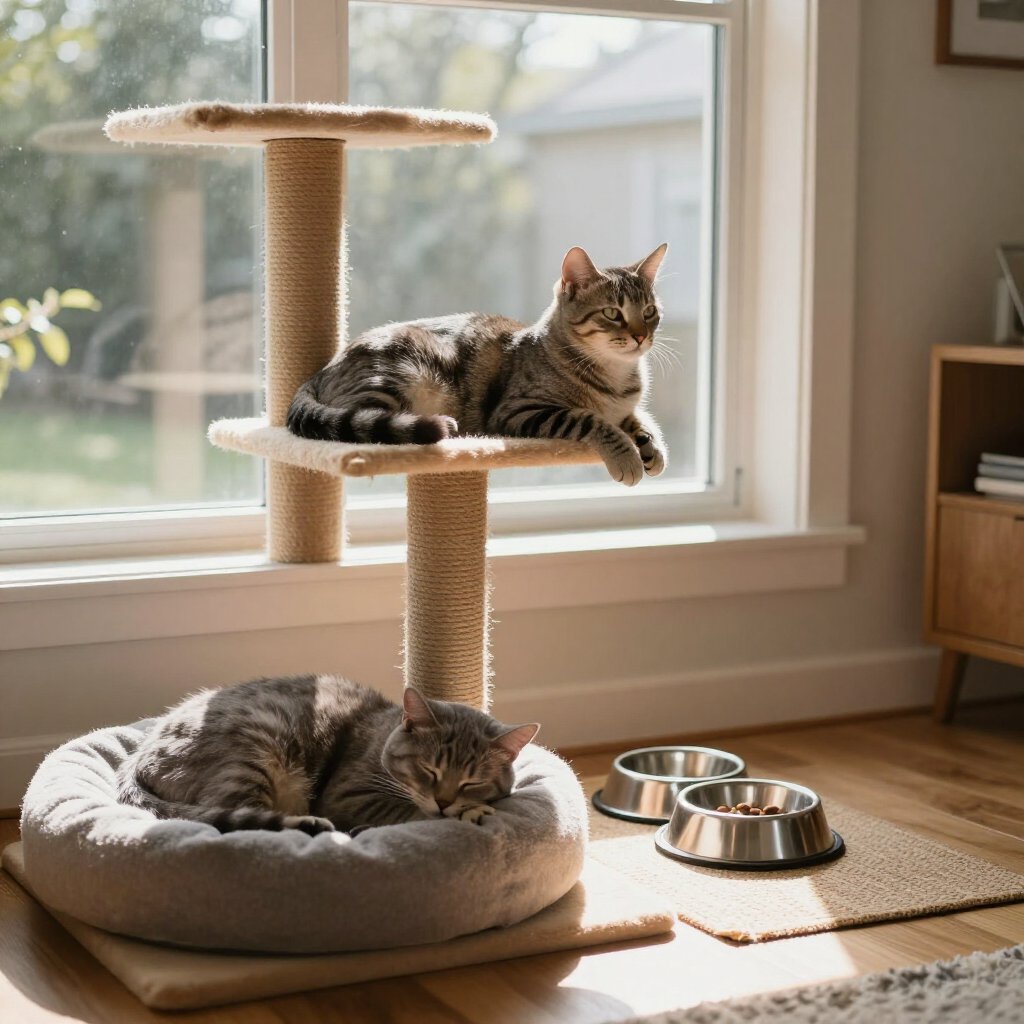
Active cats typically sleep about 12–14 hours a day, dividing that time into many short naps and a few deeper rest periods.
You should track naps for several days, noting short cat dozes and longer sleeps, then add daily totals carefully.
You’ll expect roughly four to six short naps daily, plus occasional longer stretches of deeper sleep that accumulate overall.
If you want to measure sleep quality, record uninterrupted sleep lengths, note responsiveness when roused, and compare daily averages.
Use that data to set expectations, schedule play and quiet times, and make sure your cat’s total rest meets recommended ranges. Additionally, understanding sleep needs for active cats can help you create an optimal environment for their rest.
What Factors Affect Sleep in Active Cats?
Because cats’ sleep is shaped by many daily details, you should look beyond total hours and examine specific, changeable factors.
Consider biology: age, breed, reproductive status, and chronic conditions influence sleep depth, nap frequency, and circadian timing often in cats.
You’ll note environmental factors like light levels, household noise, temperature, and available elevated resting spots affect sleep scheduling and quality.
Daily rhythms matter too, human schedules and other pets’ activity shape your cat’s active periods and nap distribution across days.
You’ll see medications, pain, illness, recent changes, and stressors often alter sleep, sometimes causing fragmented rest or increased napping. Additionally, cat energy levels can fluctuate based on these variables, impacting how well your cat sleeps.
How Can I Tell and Help My Active Cat Sleep Better?
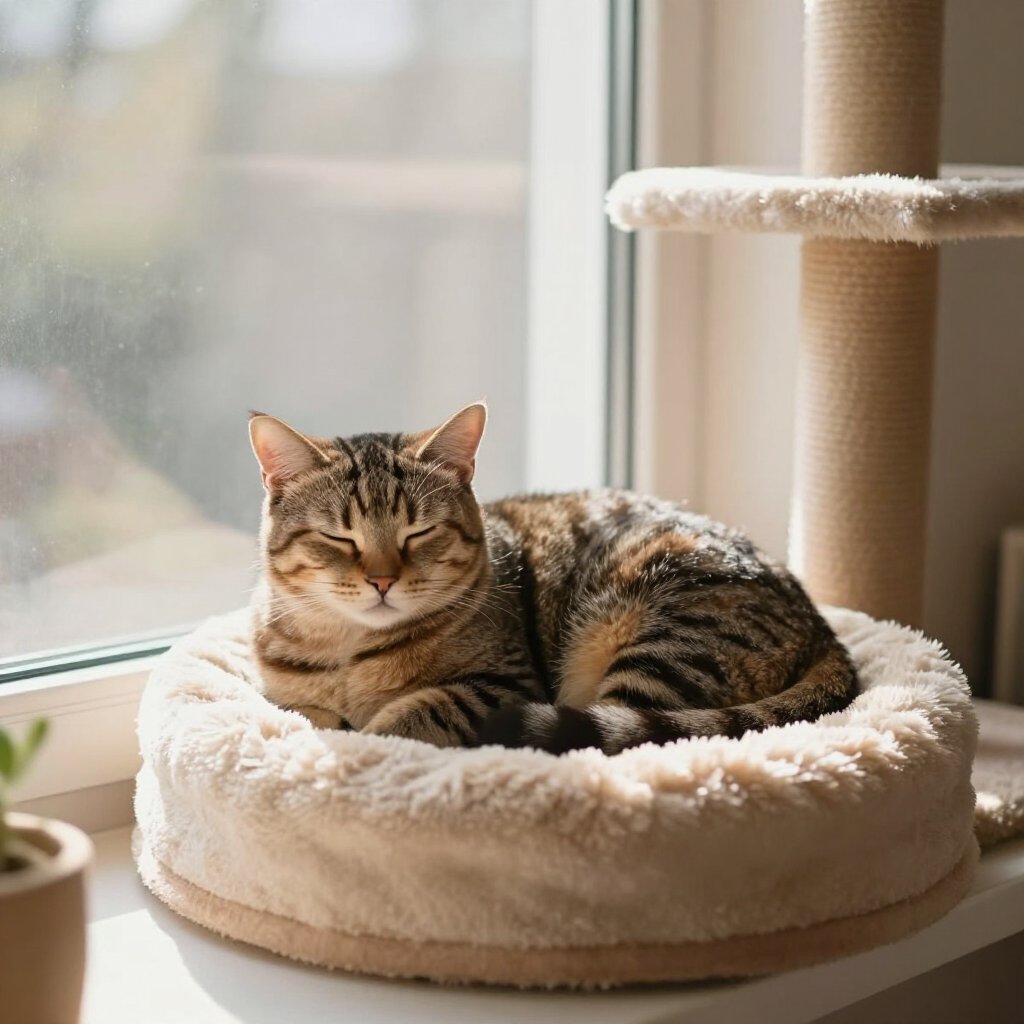
Often, you can tell your cat needs better sleep by watching its activity patterns, litter box habits, and daytime napping.
Start by scheduling active play sessions, roughly fifteen to twenty minutes each, twice daily, to tire your cat before evening.
Feed a smaller, later meal just before a calm period, dim lights and quiet television, then offer a warm bed.
Don’t ignore sudden shifts in sleep, check litter box, appetite, and behavior, and consult your veterinarian if problems persist.
Rotate quiet toys and scratching posts, reopen favored sleeping spots seasonally, and keep bedroom temperatures stable for consistent rest nightly.