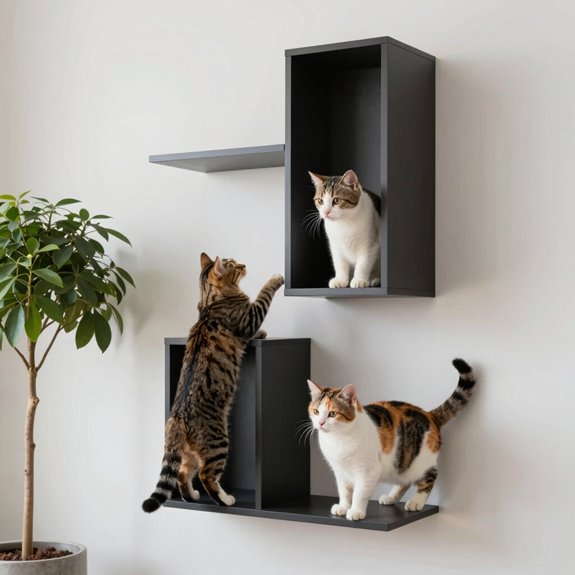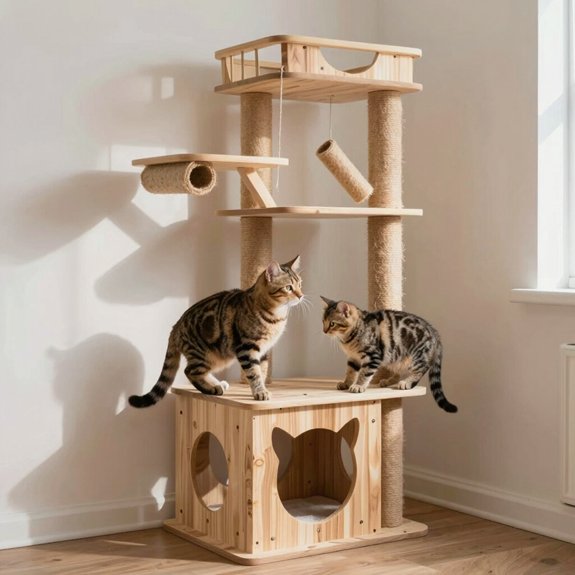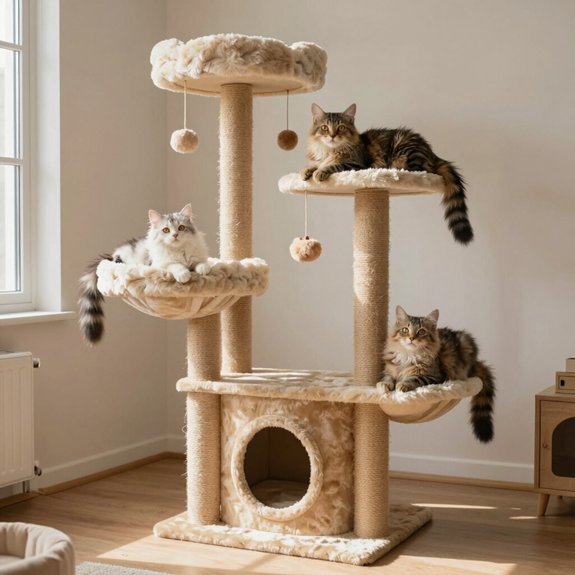
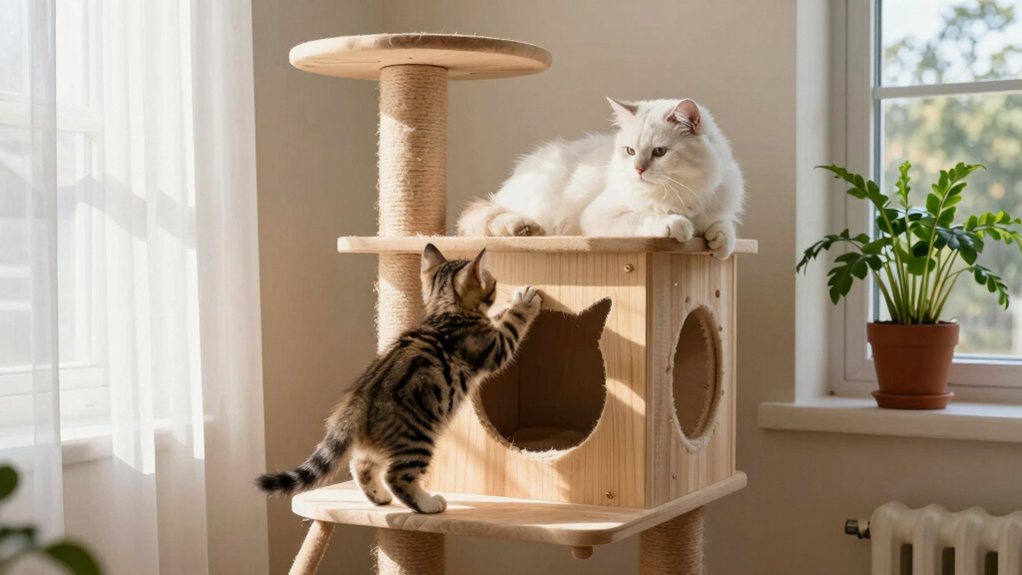
Creating climbing territory for your cat is a great way to curb boredom and destructive habits. Cats love exploring vertical spaces, which fulfill their natural instincts. Adding climbing structures like cat trees or wall-mounted shelves keeps your feline engaged and active. Position these near windows for stimulating views, and incorporate toys at different heights to motivate exploration. By providing a safe, enriching environment with plenty of climbing options, you can boost your cat’s confidence and well-being. Plus, there’s more to discover!
Why Climbing Territory Matters for Cats
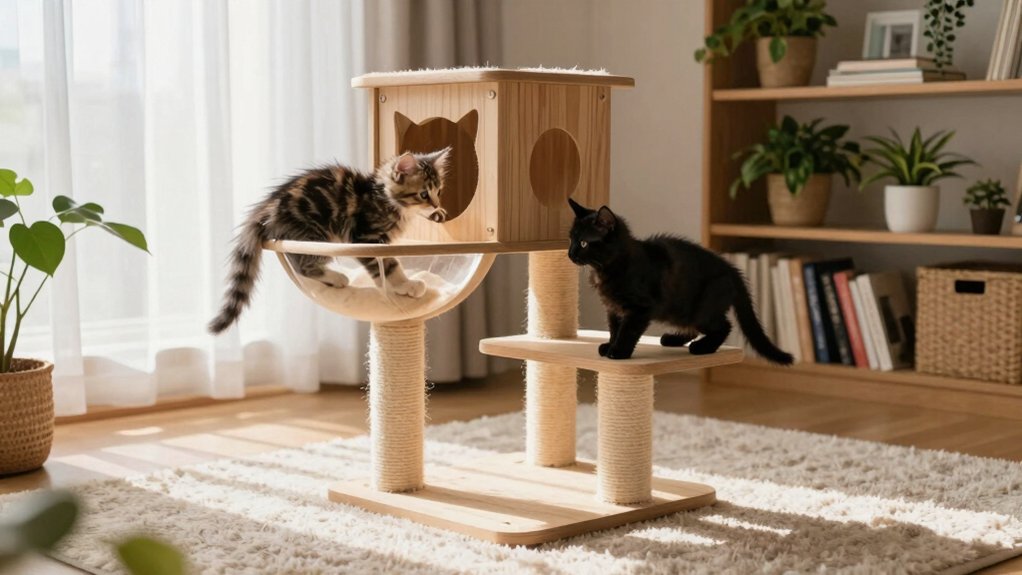
When you think about your cat’s happiness and health, climbing territory plays an essential role in their well-being. Cats are natural climbers, and providing vertical spaces allows them to explore their instincts.
A sturdy cat tree or shelves can create a safe environment for your feline friend to climb and perch. This territory encourages exercise, helping to keep them fit and active.
Additionally, elevated spots offer a sense of security, reducing stress and anxiety. You’ll notice your cat’s confidence grow as they claim their space. Indoor cat trees can provide the perfect solution to create these climbing opportunities.
Consider incorporating different heights and textures to keep it exciting (and maybe a little less boring).
How to Curb Feline Boredom With Climbing Structures
To keep your cat engaged and happy, incorporating climbing structures into their environment is a fantastic strategy.
Start by choosing a cat tree or shelves that suit your space. Place them near windows for stimulating views of birds or squirrels.
Encourage exploration by adding toys or treats at various heights. You might also consider creating a vertical playground with tunnels or ramps.
Regularly rotate the toys to maintain interest and challenge your cat. Additionally, spend time interacting with your feline friend on their new climbing structures, fostering a bond while keeping boredom at bay (and maybe even burning off some of that boundless energy!). Providing sturdy models ensures that your cat can safely enjoy their climbing experience without the risk of tipping over.
Health Benefits of Vertical Climbing Space for Cats
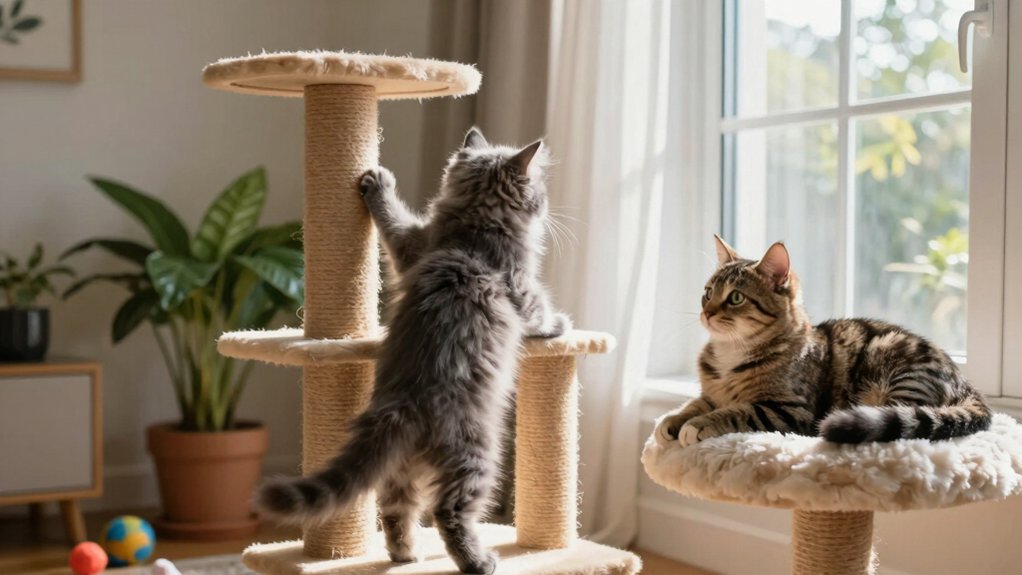
While cats are known for their playful antics, providing a vertical climbing space offers more than just entertainment; it markedly contributes to their overall health.
Climbing helps improve their muscle tone and agility, keeping them fit and active. It also encourages natural behaviors like jumping and exploring, which can reduce obesity risk.
Additionally, vertical spaces provide mental stimulation, preventing boredom and anxiety. When you create a climbing environment, you’re not just giving your cat a playground; you’re promoting healthy habits. Furthermore, investing in vertical cat trees can enhance your cat’s environment, providing them with a dedicated space to climb and explore.
Types of Climbing Structures for Cats
Several types of climbing structures can transform your home into a feline paradise. Cat trees are popular, offering multiple levels, scratching posts, and cozy hideaways.
Wall-mounted shelves provide vertical space without taking up floor area, making them ideal for smaller homes. Cat condos give your furry friend a private retreat with different perches.
You might also consider tunnels and bridges, which create fun pathways for exploration. For the adventurous cat, a catio allows safe outdoor climbing.
When choosing structures, think about your cat’s preferences and energy level to guarantee they stay engaged and entertained (and keep your furniture safe). Investing in high-quality cat trees can significantly enhance your cat’s climbing experience.
Choosing the Best Spots for Climbing
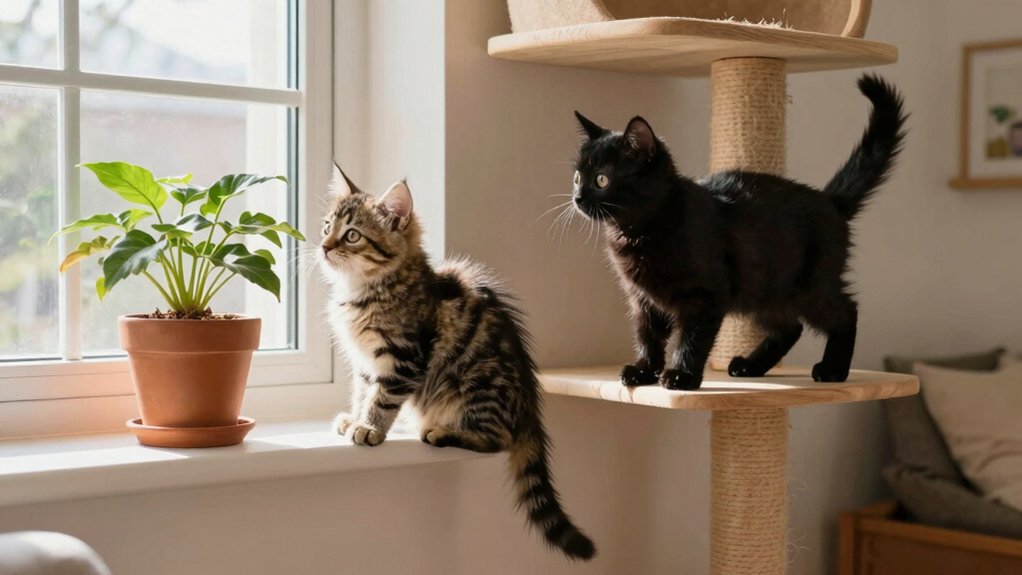
Finding the right spots for climbing structures is key to maximizing your cat’s playtime and comfort.
Look for areas near windows, as cats love watching birds and squirrels. Make sure the spot is away from heavy traffic, providing a quiet retreat.
You might also consider corners, where you can maximize vertical space while keeping the structure stable. If you have multiple cats, placing structures in separate areas can help reduce territorial disputes.
Finally, think about accessibility; your cat should easily reach the climbing spots without jumping over obstacles (unless they enjoy a good challenge). Incorporating stylish cat climbing furniture can enhance the overall aesthetic of your home while keeping your feline entertained.
Happy climbing!
Adding Interactive Features to Climbing Areas
To enhance your cat’s climbing areas, consider adding interactive features that keep them engaged and entertained.
You might install dangling toys or feather wands that sway with movement, sparking your cat’s curiosity. Incorporate puzzle feeders on various levels, encouraging them to work for treats while climbing.
You can also attach scratching posts or sisal ropes to vertical spaces, providing both exercise and enrichment. Think about using climbing shelves with varying heights, allowing exploration and play.
With these features, your cat’s climbing territory transforms into an exciting playground, reducing boredom and promoting healthy habits (plus, it makes for great cat TV!).
How Can You Encourage Your Cat to Explore Their Climbing Space?
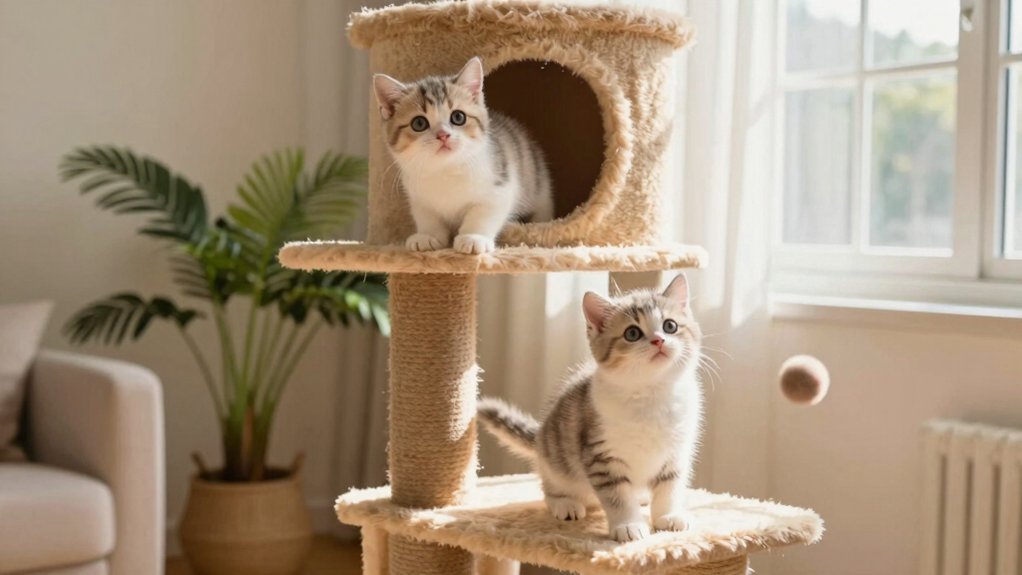
While your cat may initially be hesitant to explore their climbing space, there are several effective strategies you can use to encourage their adventurous spirit.
- Use Treats: Place tasty treats at different heights to entice your cat to climb.
- Interactive Toys: Dangle feather toys or use laser pointers to spark their curiosity and motivate them to reach new heights.
- Comfort Zones: Create cozy resting spots on various levels, so they feel secure and enjoy the space.
How to Ensure Safety in Your Cat’s Climbing Environment
Ensuring your cat’s climbing environment is safe is essential, especially since they can be quite adventurous.
Start by securing shelves and platforms to the wall, preventing any wobbling or tipping. Use non-toxic materials for any climbing structures, avoiding anything that could splinter or break.
Keep climbing areas free of sharp edges and hazardous items, like wires and fragile decor. Regularly inspect the space for wear and tear, as cats can be surprisingly destructive (who knew they could be little ninjas?).
Finally, provide a soft landing area with cushions or mats beneath to protect your feline friend from unexpected falls.
How to Transition Your Cat to a Climbing Lifestyle
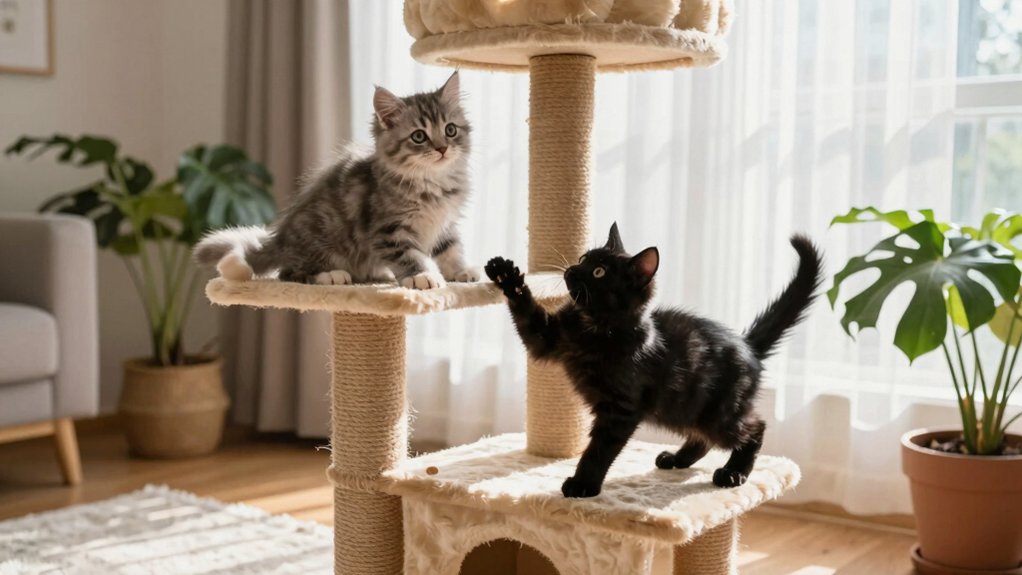
Changing your cat to a climbing lifestyle can be a rewarding adventure for both of you, as long as you take it step by step.
Start by introducing climbing structures gradually. Here’s how:
- Choose the Right Equipment: Select sturdy cat trees or wall shelves that suit your cat’s size and agility.
- Create Positive Associations: Use treats and toys to encourage exploration of the new climbing areas.
- Monitor Progress: Observe your cat’s comfort level, adjusting the environment as needed to guarantee it remains enjoyable.
With patience and encouragement, your cat will soon embrace their new climbing territory (and you might even get a workout too).
Signs Your Cat Is Happier and More Engaged
When you notice your cat enthusiastically exploring their climbing territory, it’s a clear sign they’re happier and more engaged.
Look for behaviors like pouncing, climbing, and surveying their domain. If your cat plays with toys or interacts with you more, that’s another positive indicator.
You might also see them grooming themselves more frequently, showing contentment. Their vocalizations may change too; happy cats often meow or chirp more.
Finally, if they seek out sunny spots or cozy nooks, it suggests they’re comfortable and relaxed.
These signs, while simple, show your cat’s satisfaction with their enriched environment (and maybe a little bit of feline pride).