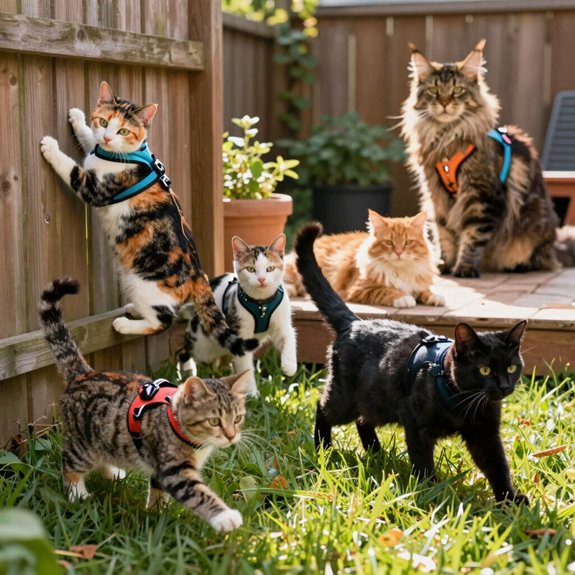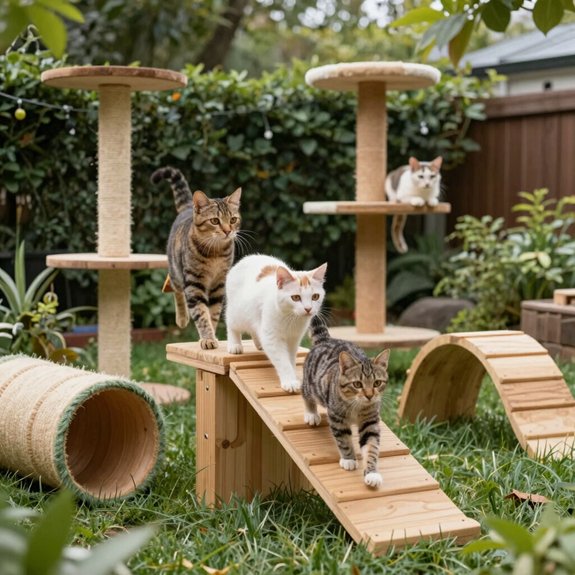
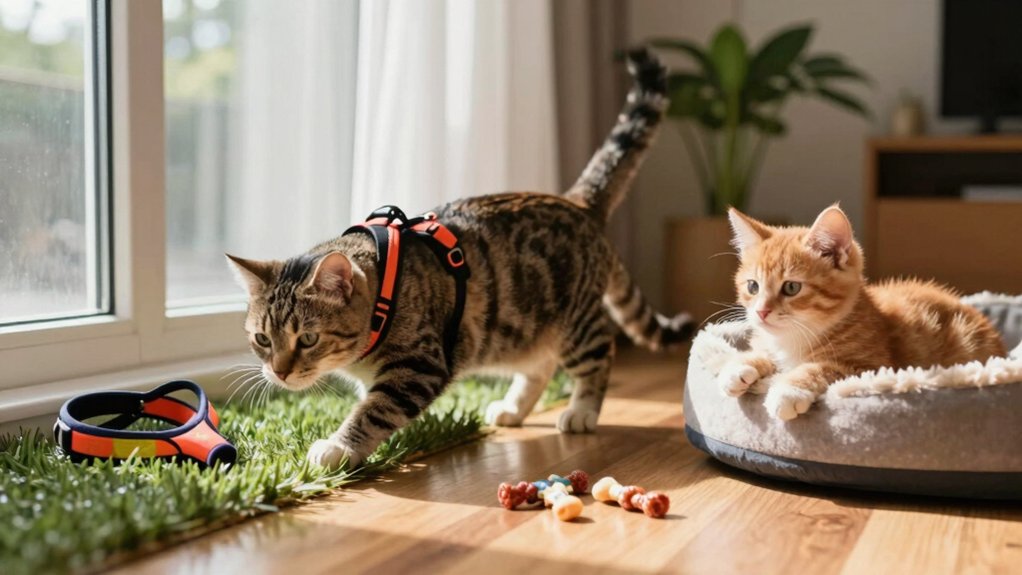
Harness training can be beneficial for anxious cats. Start by choosing a cat-specific harness that fits comfortably, like a vest-style to distribute pressure. Understand your cat’s body language—flattened ears may signal fear. Use positive reinforcement, rewarding your cat with treats when they show interest in the harness. Gradually introduce it in familiar settings, and guarantee outdoor sessions are short and safe at first. Monitor their comfort closely, and you’ll find these tips effective in easing anxiety. There’s so much more to explore on this topic!
Understanding the Benefits of Harness Training for Anxious Cats
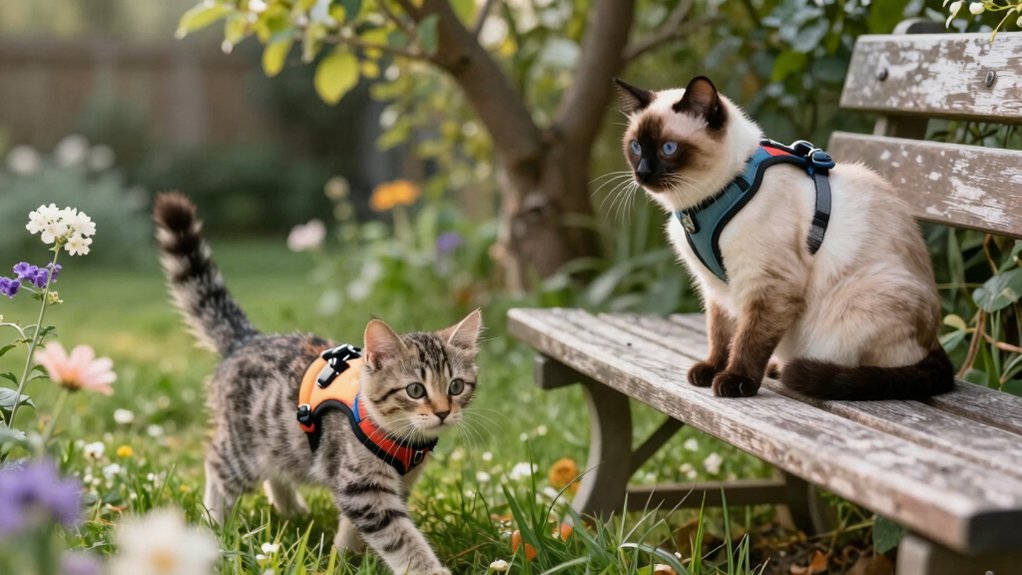
Harness training can be a game changer for anxious cats, offering both safety and freedom during outdoor adventures.
When you introduce a harness, your cat can explore the outside world without the fear of running away or getting lost. This controlled environment helps reduce anxiety, allowing your feline friend to enjoy fresh air and new sights.
Gradually, as you venture outside together, your cat will gain confidence, which can lead to a happier, more relaxed indoor life. Plus, it strengthens your bond while providing mental stimulation (and who doesn’t love a little adventure?). Additionally, using a vest-style harness can ensure a snug fit that minimizes the risk of escape while maximizing comfort during your outings.
Choose the Right Harness for Comfortable Harness Training
Finding the right harness can make all the difference in your cat’s comfort and confidence during training sessions.
Look for a harness designed specifically for cats, as these often feature a snug yet adjustable fit. Opt for lightweight materials, like breathable mesh, which prevent overheating.
A vest-style harness can distribute pressure evenly across your cat’s body, reducing stress during movement. Make certain it has quick-release buckles for easy on-and-off access.
Before purchasing, measure your cat’s neck and chest to guarantee a proper fit.
Understand Your Cat’s Body Language
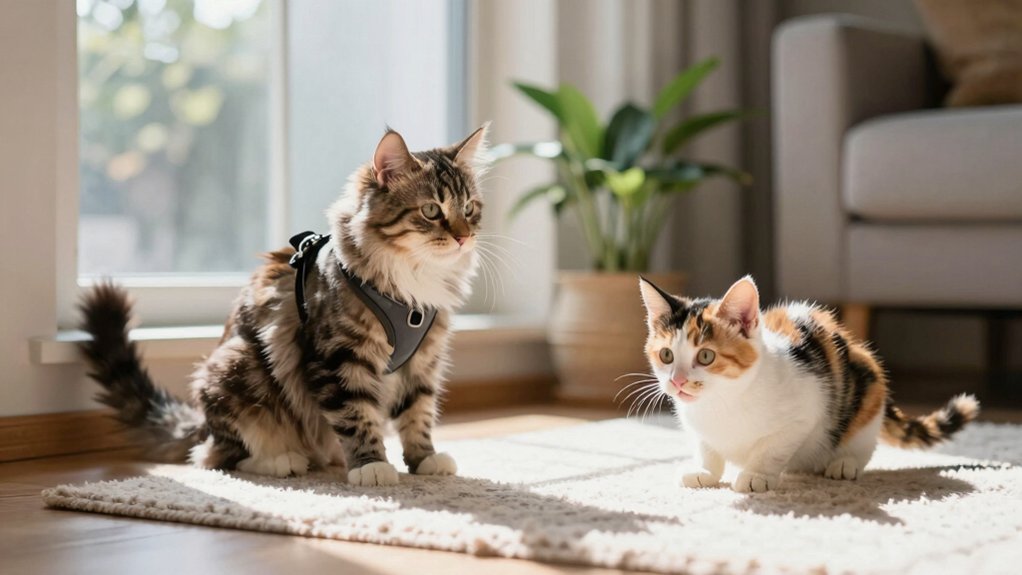
Body language is an essential tool for understanding your anxious cat during harness training.
Pay attention to their ears; if they’re pinned back, your cat might feel scared. A flicking tail often indicates agitation, while a slowly swaying tail suggests curiosity.
Watch their body posture—if your cat crouches low, they might be feeling threatened. If they approach you with a relaxed stance, it’s a good sign they’re comfortable.
Don’t forget to notice their eyes; dilated pupils can indicate stress.
Use Positive Reinforcement During Training
When training your anxious cat, using positive reinforcement can make a significant difference in their comfort level and willingness to engage. Reward your cat with treats, praise, or playtime whenever they show interest in the harness.
Start by simply allowing them to sniff the harness, then reward them immediately. Gradually increase the difficulty, rewarding them when they wear the harness for short periods.
Remember, patience is key; if they seem stressed, take a step back. Keep the mood light and playful (because who doesn’t love a good treat?).
This approach helps build trust and encourages your cat to participate willingly.
Gradually Introduce the Harness in Familiar Environments
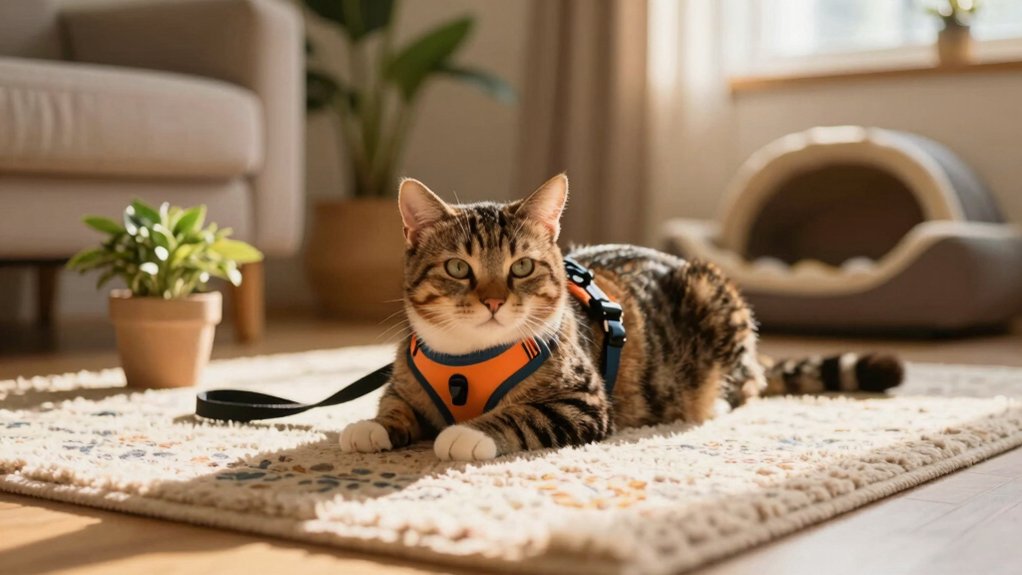
Once your cat is comfortable with the idea of the harness, it’s time to introduce it in familiar environments. Start by letting your cat wear the harness indoors, perhaps while they’re lounging on their favorite perch.
Offer treats and praise when they’re calm. Gradually increase the time they wear it, ensuring they associate the harness with positive experiences. You can also try walking them around the house, allowing them to explore while still feeling secure.
If they seem anxious, take a step back, and let them adjust. Remember, patience is key—after all, Rome wasn’t built in a day (and neither is a confident kitty).
Start With Short and Safe Outdoor Sessions
Before heading outdoors, make certain your cat is fully comfortable with the harness and leash in a safe environment.
Start by taking short, five-to-ten-minute sessions in a quiet area, like your backyard or a calm park. Gradually introduce your cat to new sights and sounds, allowing them to explore at their own pace.
Use treats to reward bravery and positive behavior—think of it as a mini adventure (without the catnip hangover). If your cat seems stressed or hesitant, don’t push them; simply return indoors and try again later.
Always prioritize their comfort to guarantee a positive experience overall.
Monitor Your Cat’s Stress and Comfort
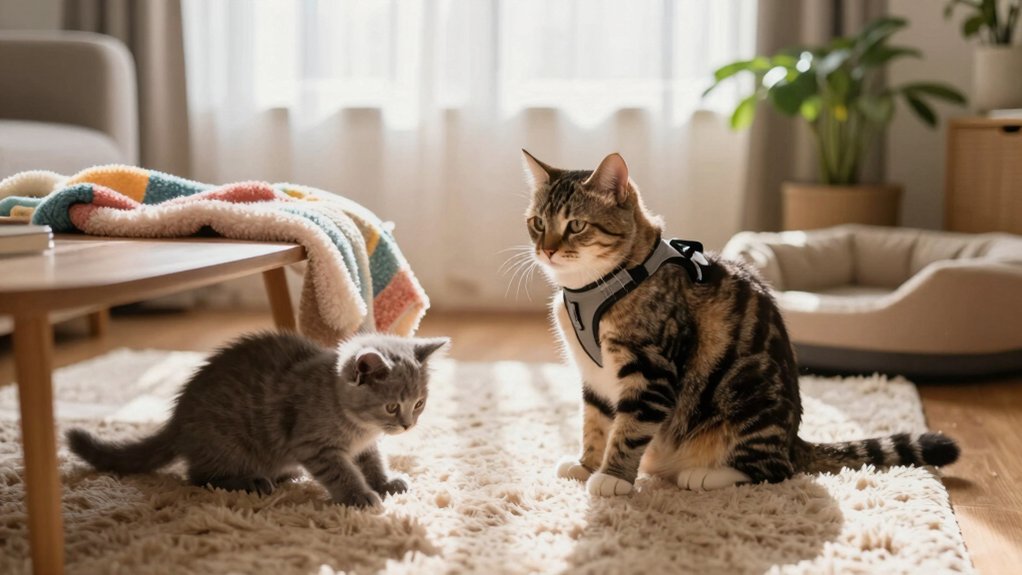
To guarantee your cat enjoys their outdoor adventures, it’s essential to keep a close eye on their stress levels and comfort.
Watch for signs like flattened ears, a twitching tail, or excessive hiding. If you notice these, take a break or head back home. Always bring treats and favorite toys to create a positive association with the environment.
Additionally, make sure the harness fits well, allowing freedom of movement without causing discomfort. If your cat seems overwhelmed, try shorter sessions or choose quieter locations.