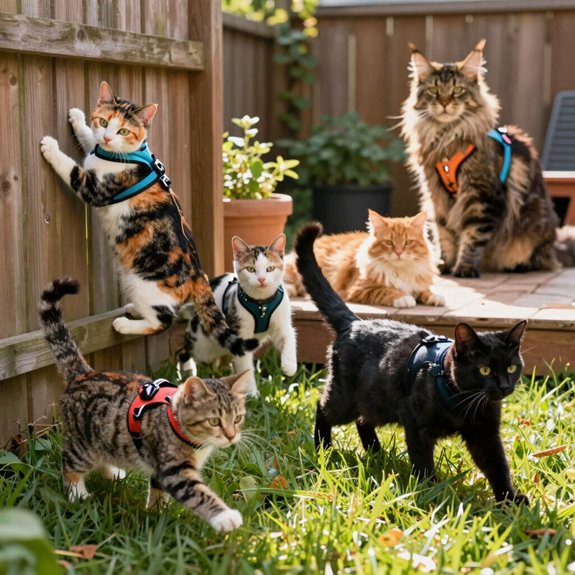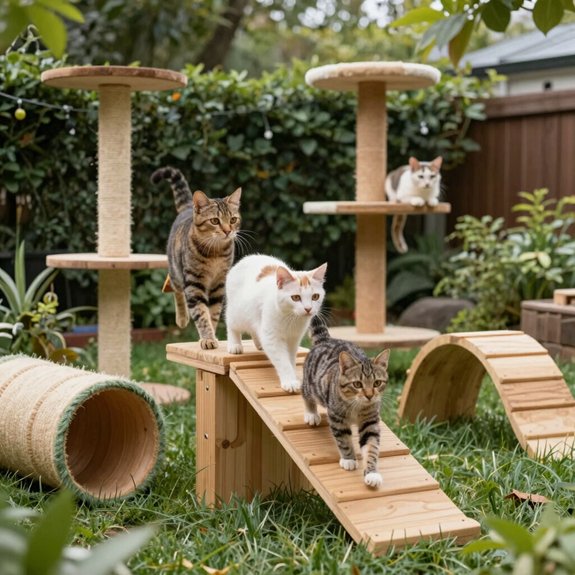
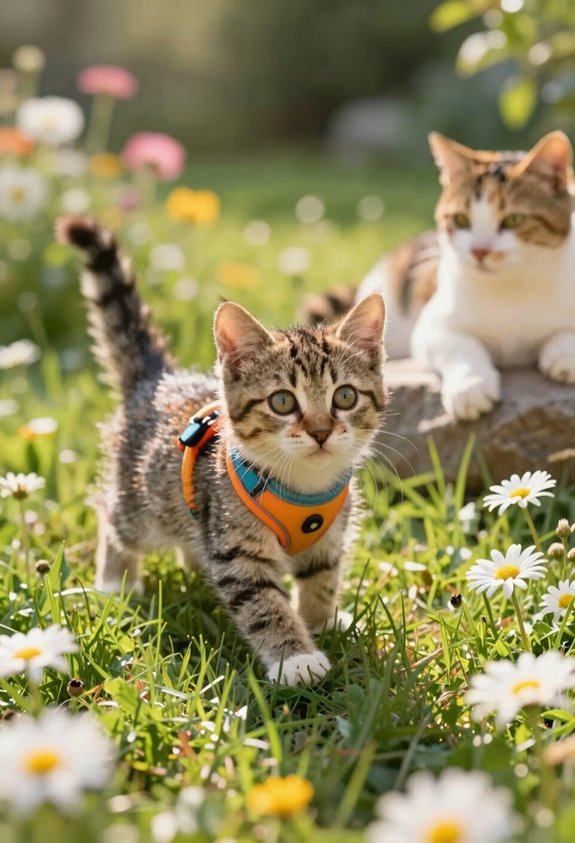
To successfully harness train your cat, start by choosing the right harness that fits snugly but comfortably. Create positive associations with the harness by letting them sniff it, using treats, and practicing short indoor sessions. Gradually take your cat to safe outdoor areas and monitor their comfort levels. Consistency is key, so maintain a regular schedule and celebrate small victories. Be ready for unexpected moments (like a squirrel dash), and stay patient as you navigate this new adventure together. There’s plenty more to learn about harness training your feline friend!
Choose the Right Harness for Your Cat
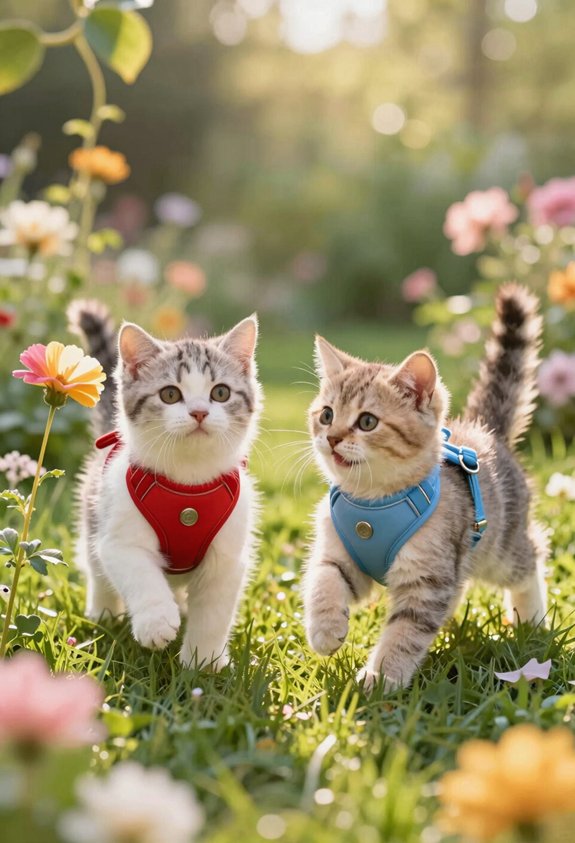
When you’re ready to start harness training your cat, choosing the right harness is crucial for a successful experience.
Look for a harness that’s specifically designed for cats, as they need a snug fit without being too tight. Consider a step-in or vest-style harness, which distributes pressure evenly.
Measure your cat’s neck and girth to guarantee proper sizing; a harness should be adjustable to accommodate growth or weight changes. Lightweight materials are ideal for comfort.
Avoid those that restrict movement or have too many straps (your cat isn’t a fashion model).
With the right harness, you’ll both enjoy outdoor adventures!
Create Positive Associations With Harness Training
To create positive associations with harness training, start by introducing the harness gradually and making it a part of your cat’s everyday environment.
Let your cat sniff and explore the harness before putting it on. Use treats and praise during each interaction to build excitement.
- Reward your cat with their favorite treats when they show interest in the harness.
- Practice putting the harness on for short periods, gradually increasing the time.
- Incorporate playtime with the harness on, making it a fun and engaging experience.
With patience and consistency, your cat will start to associate the harness with positive moments. Additionally, ensure the harness has escape-proof mechanisms to prevent any unexpected slips during outdoor activities.
Practice Indoor Training Before Outdoor Adventures
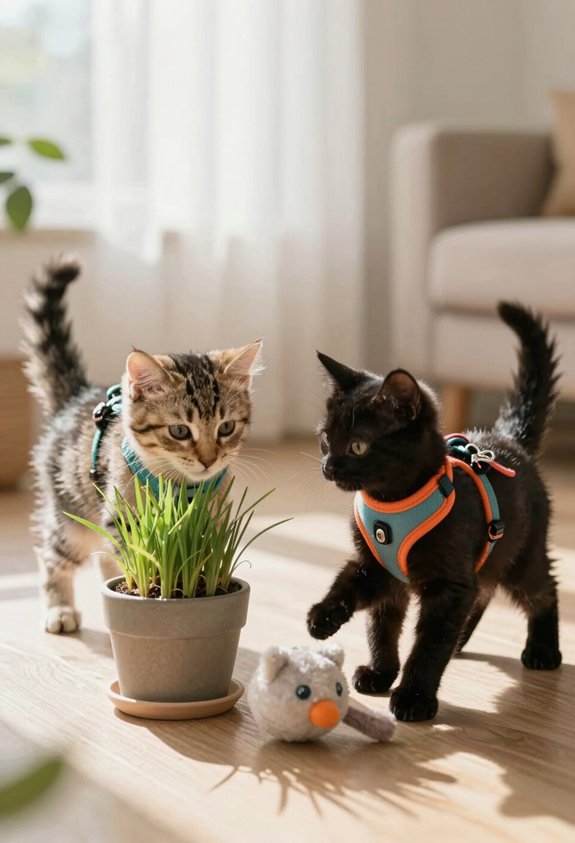
Before you venture outdoors with your cat, practicing indoor training is essential for building confidence and ensuring a smooth experience.
Start by letting your cat wear the harness indoors for short periods. Reward them with treats and praise to create positive associations.
Next, attach the leash while they explore your home, allowing them to roam freely (but be ready to dodge the occasional cat zoomies!).
Gradually introduce commands like “come” or “stay” to reinforce desired behaviors.
This indoor practice helps your cat feel secure and familiar with the harness, making outdoor adventures less intimidating and way more enjoyable for both of you.
Start With Short Explorations in Safe Areas
Starting your cat’s outdoor adventures in safe areas is essential for their comfort and safety.
Begin by choosing a familiar, enclosed space, like your backyard or a quiet park, where they can explore without overwhelming distractions.
- Monitor your cat’s body language for signs of stress or excitement.
- Use treats or toys to encourage positive associations with the outdoors.
- Keep sessions short, aiming for 10 to 15 minutes, so your cat remains engaged and comfortable.
These initial explorations help build confidence while ensuring your feline friend enjoys their time outside without unnecessary stress (and yes, you might get some adorable photos!).
Gradually Increase Outdoor Exposure and Distance
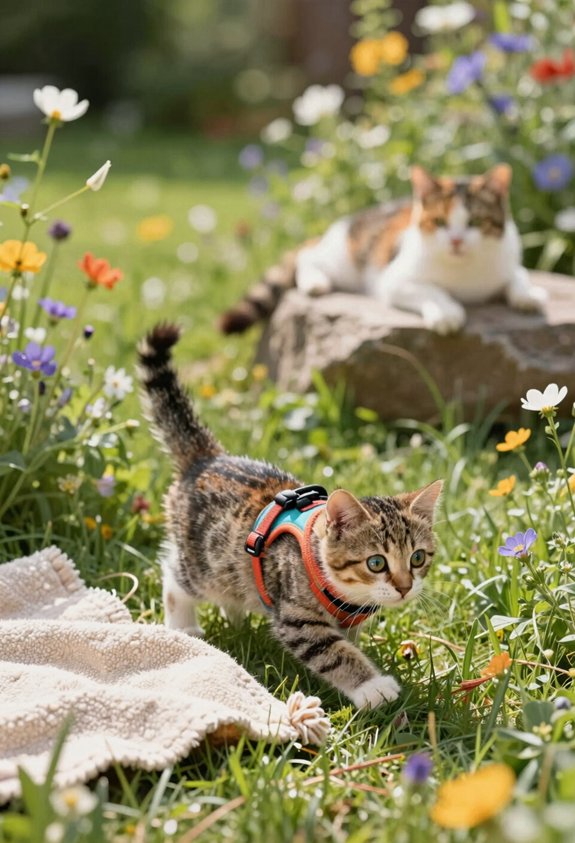
As your cat becomes more comfortable with the outdoors, it’s time to gradually increase their exposure and the distance you venture together.
Start by extending your walks a few extra feet each time, allowing your cat to explore new scents and sights at their own pace. If they seem relaxed, try visiting nearby parks or quiet streets.
Always keep a close eye on your cat’s reactions, adjusting the distance based on their comfort level. Incorporate breaks to let them observe their surroundings, which can make the experience enjoyable.
Recognize Your Cat’s Comfort Signals
Understanding your cat’s comfort signals is essential for a successful harness training experience. Pay close attention to how your cat behaves; this will guide you in making the process enjoyable.
Here are some signs to recognize:
- Purring or relaxed body posture: Indicates your cat feels comfortable and safe in the harness.
- Ears facing forward: Shows curiosity and interest, suggesting your cat is open to exploring.
- Tail position: A raised tail generally means your cat is feeling confident and happy.
Use Treats and Praise to Reinforce Good Behavior
Using treats and praise effectively can transform your cat’s harness training experience into a positive one. When your cat follows commands or explores while wearing the harness, immediately reward them with a treat. This reinforces good behavior and encourages them to repeat it.
Use a cheerful tone to praise your cat, saying things like, “Good job!” or “You’re doing great!” Consistency is key; always reward positive actions, whether it’s walking calmly or simply wearing the harness.
If your cat seems hesitant, offer treats to build confidence. Remember, patience is essential—training takes time, but the rewards are worth it (and so is your sanity).
Be Prepared for Walk Surprises
When you take your cat out for a walk, expect the unexpected, as outdoor adventures can bring a variety of surprises.
Your feline friend might encounter new sounds, sights, or even other animals that can catch them off guard.
To handle these surprises, remember to:
- Stay calm and reassure your cat with a soft voice.
- Keep your harness and leash secure to prevent any escapes.
- Bring treats to encourage and reward your cat for staying focused.
Stay Consistent With Training and Be Patient
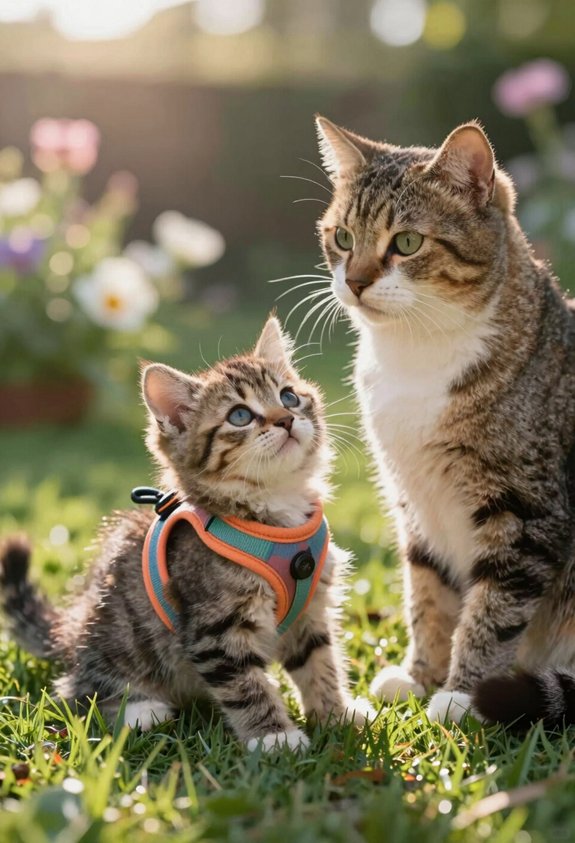
Staying consistent with training and practicing patience are key to helping your cat adjust to harness walking.
Set a regular schedule for training sessions, ideally at the same time each day. Start indoors, letting your cat explore the harness while offering treats. Gradually introduce short walks, increasing the distance as your cat becomes more comfortable.
If your cat hesitates or resists, don’t rush; give them time to acclimate. Celebrate small victories, like wearing the harness without fuss.
Troubleshoot Common Harness Training Challenges
Even though harness training can be a rewarding experience, you might encounter some common challenges along the way.
Don’t worry; these issues are manageable with a little patience and creativity.
- If your cat resists wearing the harness, try letting them explore it first, perhaps with treats nearby.
- Should they refuse to walk, encourage them with a favorite toy or treat, making it a fun adventure.
- If your cat gets scared outside, start in a quieter area, gradually exposing them to new sights and sounds.
With time, your feline will learn to embrace their harness and enjoy outdoor escapades.