To build a cat obstacle course, start by evaluating your space for safety—remove hazards and guarantee bright lighting. Use sturdy, household items like cardboard boxes and pillows for obstacles. Add tunnels for exploration, and incorporate vertical elements like sturdy furniture. Design jumping challenges while keeping everything adjustable to fit your cat’s skill level. Monitor your pet’s comfort, reward them during training, and celebrate their achievements (no cat is too cool for a treat). There’s more to explore!
How to Assess Your Space for a Cat Obstacle Course
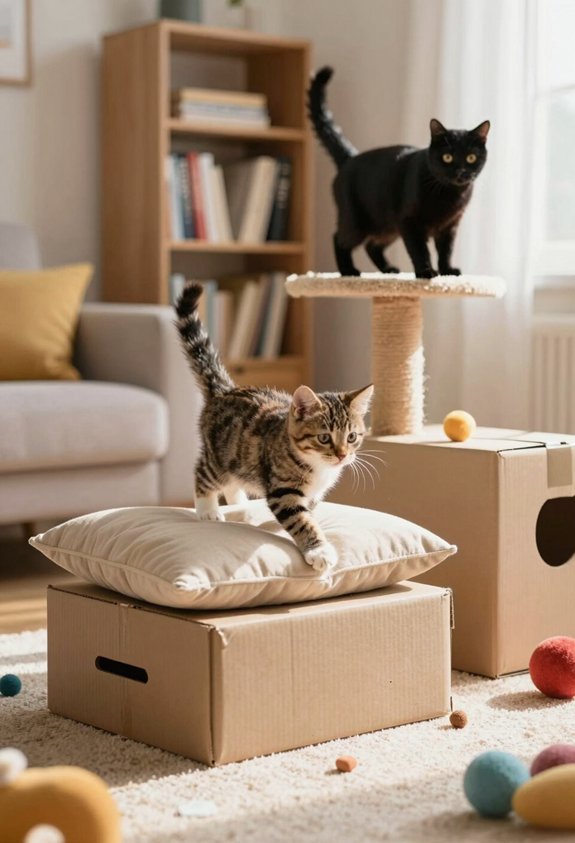
Before you plunge into creating an obstacle course for your cat, it’s essential to assess your space carefully. Start by measuring the area where you’ll set up the course, guaranteeing it’s free of hazards like sharp objects or fragile items.
Next, consider your cat’s agility and preferences; does she enjoy climbing or jumping? Identify spots for jumps, tunnels, or platforms. Confirm there’s enough room for your cat to move freely without feeling cramped.
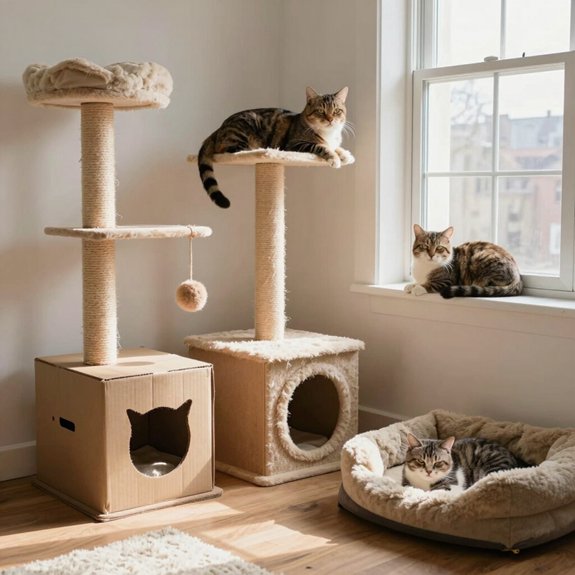
Finally, think about lighting—bright areas are best for visibility. Additionally, incorporating elements like indoor cat trees can enhance your cat’s playtime experience. With a clear plan in mind, you can create a fun and safe environment for your feline friend to explore!
Choose Safe Materials for Your Cat Obstacle Course
Creating a safe and engaging obstacle course for your cat starts with selecting the right materials. Choose sturdy items like cardboard boxes, wooden planks, or soft fabric. Avoid materials that could splinter, crumble, or pose choking hazards. Opt for non-toxic paint if you decide to decorate.
For surfaces, use carpet remnants or foam mats to prevent slipping. Make certain all items are stable, so they won’t tip over during playtime. Remember, your cat’s safety is a priority; avoid sharp edges and small parts (unless you enjoy playing doctor).
Carefully inspect everything before letting your feline friend explore their new playground!
Add Tunnels and Hideaways for Exploration
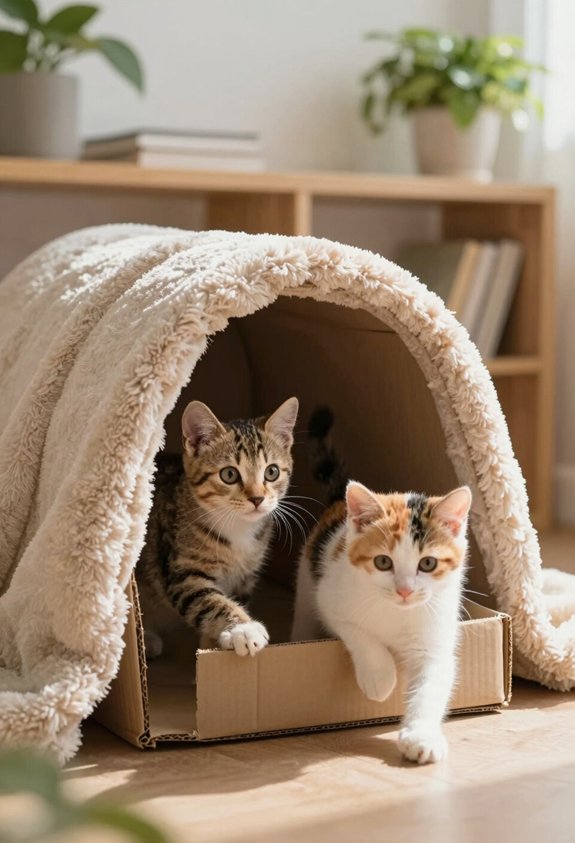
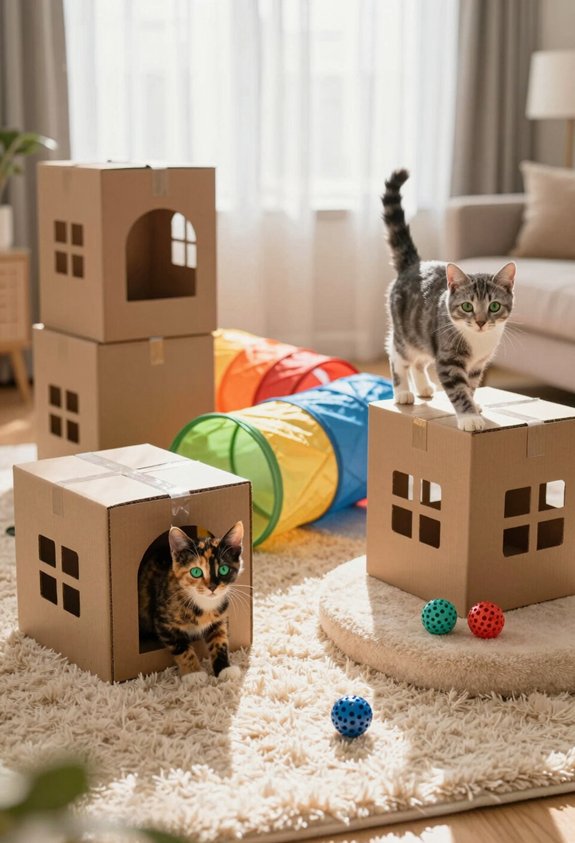
Adding tunnels and hideaways to your cat’s obstacle course can greatly enhance their exploration and playtime experience. You can use flexible tubes or fabric tunnels that allow your cat to crawl through, stimulating their natural curiosity.
Additionally, consider placing cardboard boxes or pet-specific hideouts for them to retreat into. These hideaways provide safety and comfort, making exploration more appealing.
To spice things up, you can even add some catnip or toys inside these spaces. Remember, the more varied the environment, the more engaged your cat will be. Cat tunnels can provide a fun and exciting environment for your feline friends to enjoy.
After all, who wouldn’t want their own secret lair? (Just don’t tell the dog!)
Incorporate Vertical Elements for Climbing
While your cat may love to explore on the ground, incorporating vertical elements into their obstacle course can elevate their playtime experience.
Think about adding shelves, cat trees, or wall-mounted perches for climbing. Securely attach these items to the walls or use sturdy furniture to create multi-level platforms. You can even use cardboard boxes stacked at different heights.
Encourage your cat to explore by placing treats or toys on these elevated spots. Remember, the more varied the heights, the more engaging it becomes. Additionally, providing vertical cat trees can enhance their climbing experience and offer them a dedicated space for play.
Your feline friend will enjoy the challenge, and let’s face it, they’ll look pretty majestic doing it!
Design Jumping Challenges for Your Cat
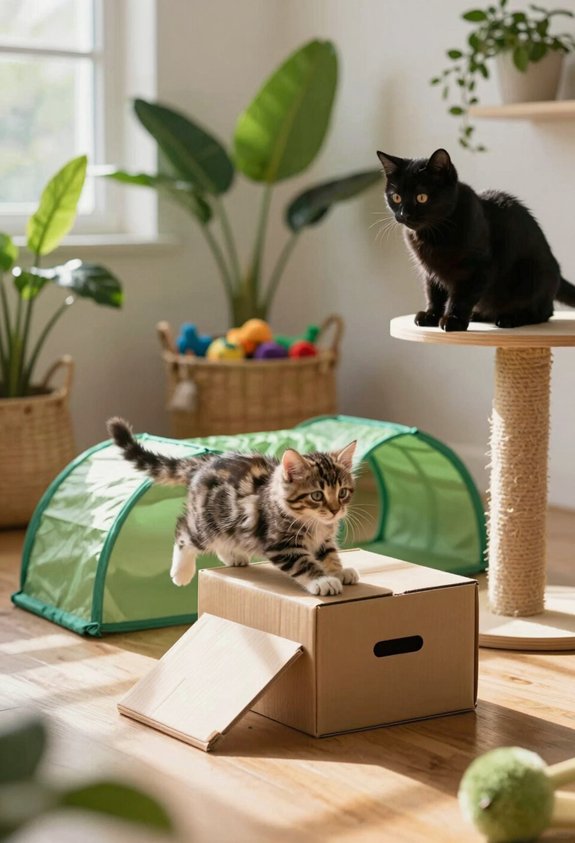
To keep your cat engaged and physically active, designing jumping challenges can be a fun way to stimulate their natural instincts.
Start by creating platforms of varying heights, using sturdy furniture or repurposed boxes. Arrange them in a sequence, encouraging your cat to leap from one to another.
Consider adding hurdles made from lightweight materials, like broomsticks, placed at different heights. You can also use soft cushions or blankets for safe landings (because cats aren’t known for their grace!). Incorporating interactive cat toys can further enhance their play experience and motivate them to jump.
Always supervise your cat during playtime and adjust the challenges based on their skill level to guarantee they’re having fun while staying safe.
Motivate Your Cat With Treats and Toys
Once your cat has mastered jumping challenges, you can keep their excitement high by incorporating treats and toys into the mix.
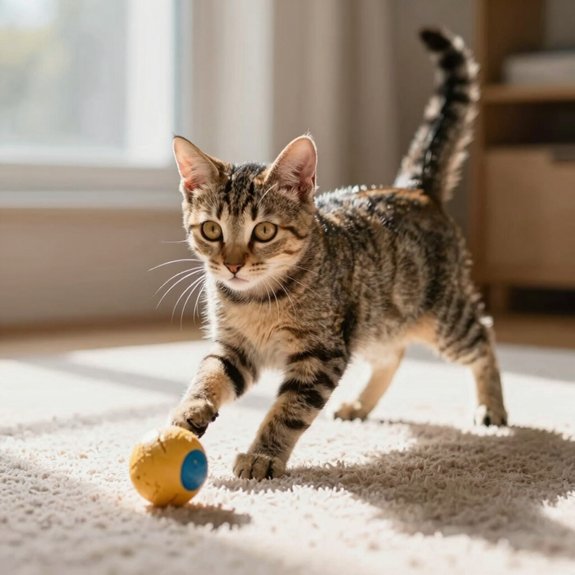
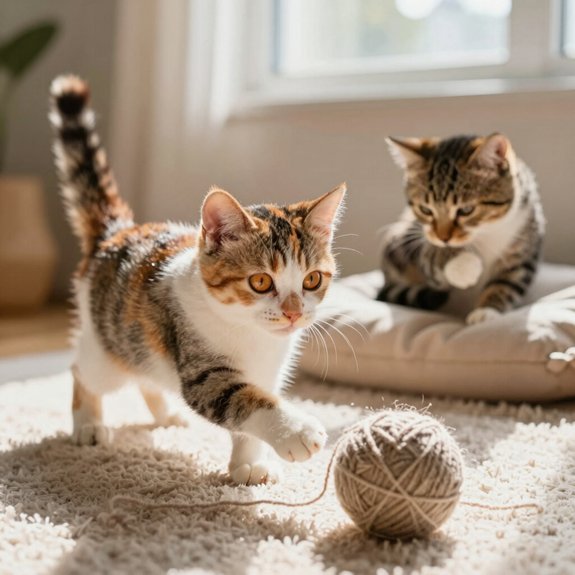
Use small, tasty treats as rewards when they complete an obstacle. This encourages them to keep going. You might also consider interactive toys, like feather wands or laser pointers, to engage their hunting instincts.
Set up a toy station at the end of the course, where your cat can play with their favorite items. Remember, positive reinforcement is key—praise your cat as they navigate the course.
After all, who wouldn’t want a snack after a good workout? (Just like us!)
Make Your Cat Obstacle Course Easily Adjustable
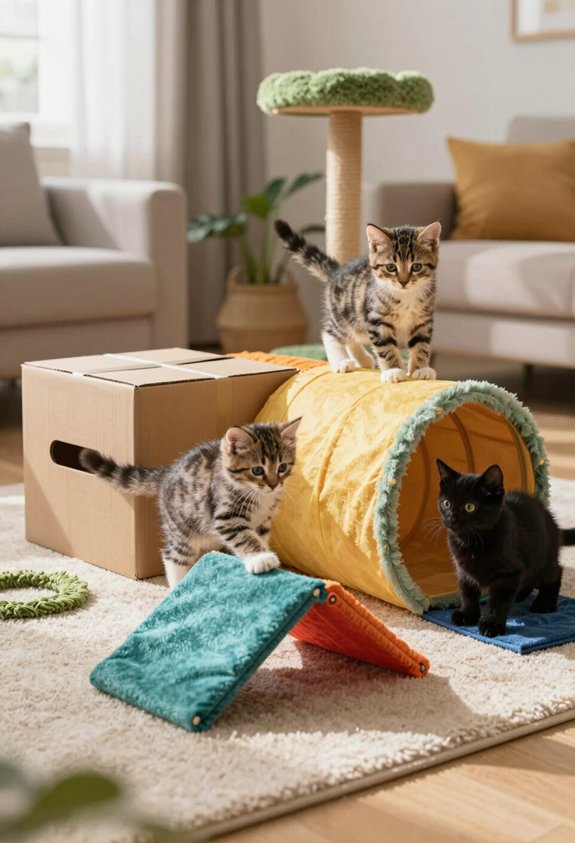
Creating a cat obstacle course that’s easily adjustable can make your training sessions more effective and fun.
Use modular components, like removable tunnels and adjustable jump heights, to keep things fresh. For instance, you can stack cushions at different heights to create various jumps.
Also, consider using lightweight, movable furniture to change the layout quickly. This flexibility allows you to tailor the course to your cat’s skill level, ensuring they’re always challenged but never overwhelmed.
As your cat improves, try rearranging obstacles or introducing new ones. Just remember, variety keeps your feline friend engaged (and maybe a little competitive).
Keep an Eye on Your Cat’s Comfort and Safety
While adjusting your cat’s obstacle course can make training more engaging, it’s equally important to prioritize your cat’s comfort and safety.
Make certain all materials are sturdy, without sharp edges or small parts that could be swallowed. Observe your cat’s behavior; if they seem hesitant or scared, adjust the course to build confidence.
Use soft surfaces, like blankets or cushions, to prevent injuries during jumps or falls. Keep the area free of hazards, like cords or breakable items.
Finally, always supervise your cat while they navigate the course. (You wouldn’t want them to channel their inner stunt double without a safety net!) Additionally, ensure that the obstacle course includes durable sisal-wrapped posts, which can serve both as a scratching outlet and a safe climbing feature.
Create a Fun Training Routine Together
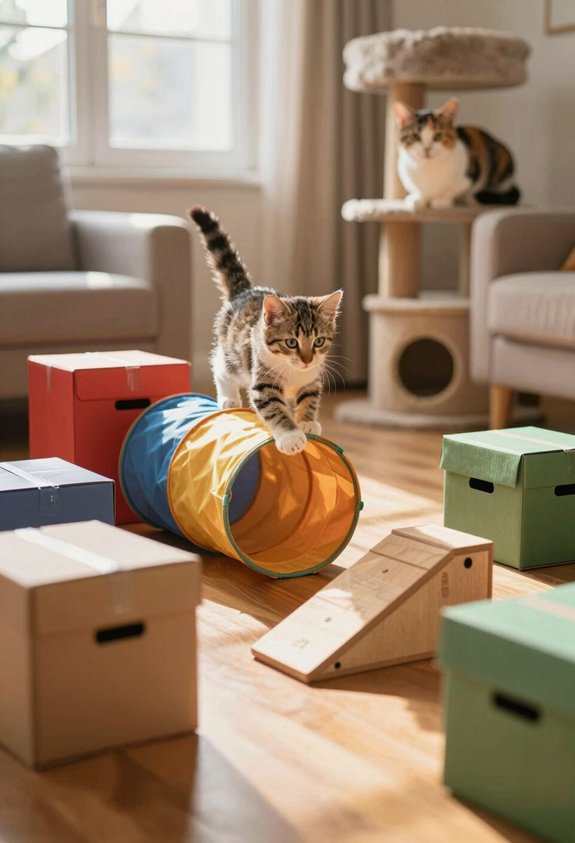
To make your training sessions enjoyable for both you and your cat, it’s essential to establish a routine that feels fun and engaging.
Start by setting aside a specific time each day, like after breakfast or before bed. Use varied cues, such as treats or toys, to encourage your cat through the obstacle course.
Keep sessions short, around 10-15 minutes, to maintain their interest. Incorporate different challenges each time, like jumping over or crawling under obstacles.
Celebrate Your Cat’s Achievements in the Obstacle Course
Recognizing and celebrating your cat’s achievements in the obstacle course is essential for building their confidence and encouraging further participation.
Here are some effective ways to celebrate their successes:
- Treats: Reward your cat with their favorite treats after completing each obstacle successfully.
- Praise: Use a cheerful voice to praise your cat, reinforcing positive behavior.
- Playtime: Incorporate extra playtime with a favorite toy, making the experience fun and rewarding.
- Photo Opportunities: Capture their triumphs with pictures, showcasing your cat’s progress (because who doesn’t love a good cat photo?).
These small celebrations can motivate your furry friend to keep participating!