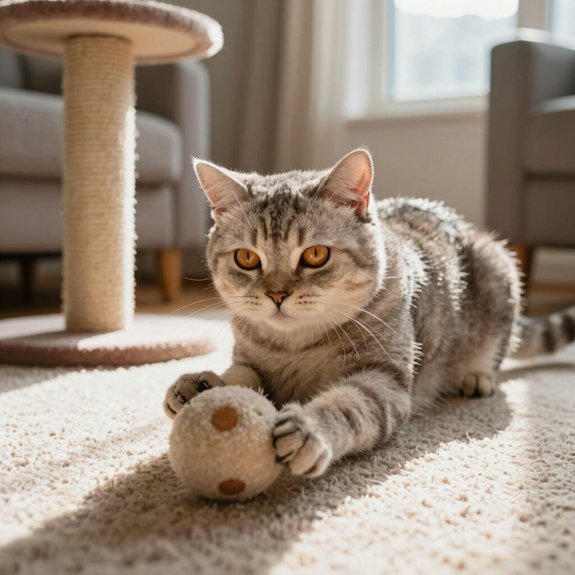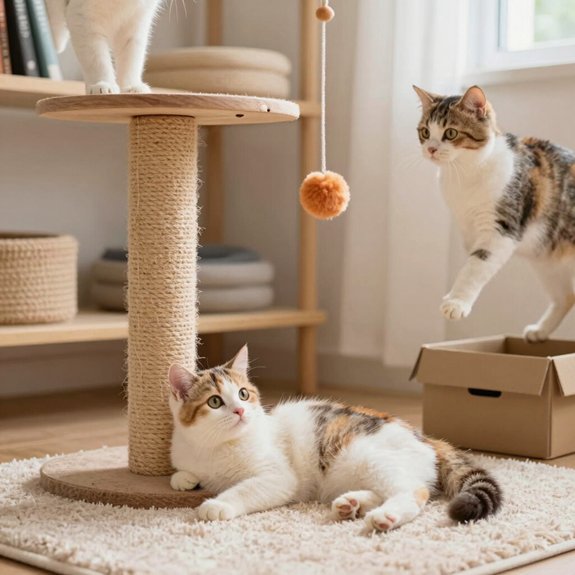
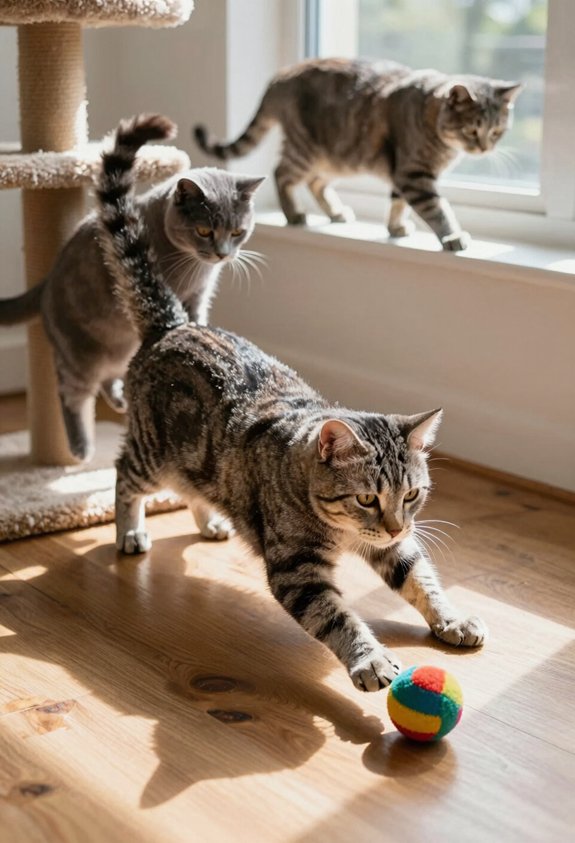
To keep your senior cat thriving, incorporate daily exercise that’s gentle yet engaging. Use interactive toys like feather wands or laser pointers for low-impact fun. Simple activities like short play sessions a few times a day stimulate their minds and bodies, encouraging movement without overwhelming them. Set up a routine to foster consistency in playtime, and consider gentle stretches or puzzle toys for added engagement. Want to learn more about how to encourage exercise effectively?
Why Is Daily Exercise Important for Senior Cats?
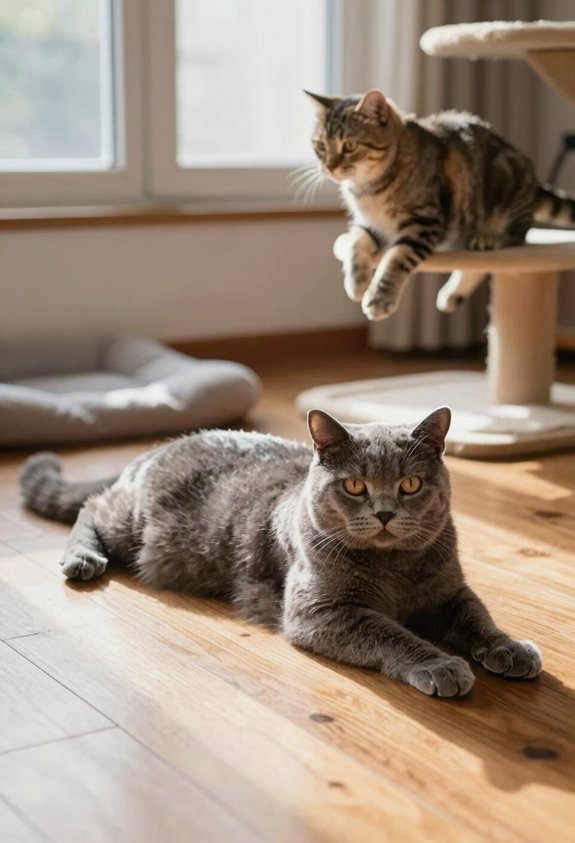
While it might seem tempting to let your senior cat lounge all day, daily exercise is essential for maintaining their health and happiness.
Regular activity helps prevent obesity, which can lead to diabetes and joint issues. When you engage your cat in play, it stimulates their mind and keeps them agile. Simple exercises like using a feather toy or rolling a ball can encourage movement.
Additionally, social interaction during playtime strengthens your bond. Aim for short sessions, a few times a day, to keep your furry friend active without overwhelming them. Incorporating tools like exercise wheels can enhance their playtime experience and provide them with a fun way to stay fit.
After all, a happy cat is a healthy cat! (And who doesn’t want that?)
What Your Aging Cat Needs to Stay Active
To keep your aging cat active, you’ll need to focus on a few key elements that cater to their unique needs.
First, make sure they’ve easy access to their favorite resting spots, as comfort encourages movement.
Second, provide interactive toys that stimulate their mind and body, like feather wands or laser pointers (don’t worry, they’re not training for the Olympics!). Consider incorporating cat puzzle toys that promote mental stimulation and mimic natural foraging behaviors.
Third, establish a routine to encourage daily playtime. Short, frequent sessions are best, allowing them to build strength without overexertion.
Finally, consider gentle stretching exercises to maintain flexibility, which helps keep your cat spry and engaged in their golden years.
Safe Indoor Activities for Senior Cats
Engaging your senior cat in safe indoor activities is essential for their physical and mental well-being. Simple, interactive play can keep them active and entertained.
Consider these safe options:
- Puzzle toys: These stimulate your cat’s mind and encourage problem-solving skills. They can also reward your cat with treats. Additionally, engaging cat puzzle toys can help prevent boredom and promote healthy activity levels.
- Gentle laser pointers: Cats love the chase, and a laser pointer can provide low-impact exercise without too much strain.
- Feather wands: You can bond with your cat while encouraging them to pounce and leap, mimicking their natural hunting instincts.
Outdoor Exercises for Senior Cats
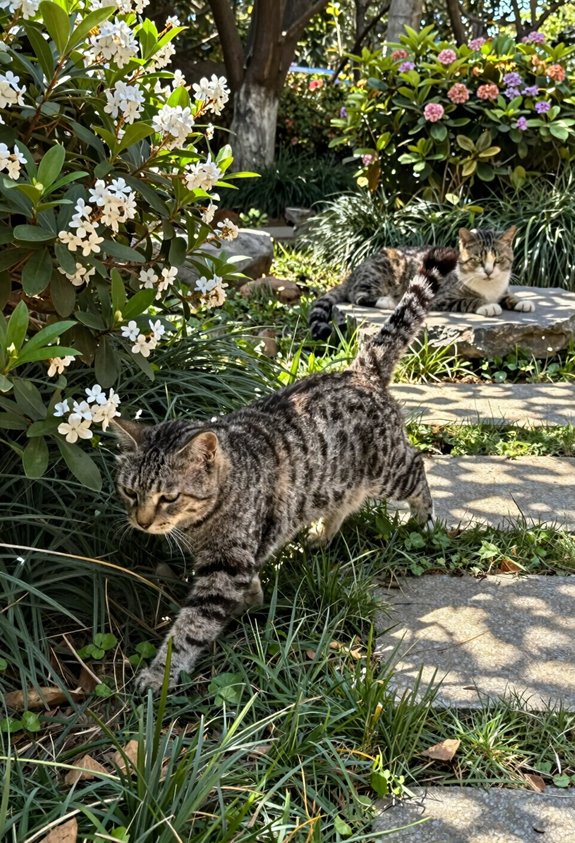
When you take your senior cat outdoors, it’s important to choose activities that are both safe and engaging.
Try using a harness and leash for gentle strolls around your yard or a nearby park. This way, your cat can explore new scents and sights while staying secure.
You can also set up a small obstacle course with soft, low structures, encouraging your cat to navigate them at their own pace.
Finally, consider interactive toys like feather wands, which can stimulate their hunting instincts without requiring too much exertion. Additionally, providing a catio outdoor enclosure can offer a safe space for your cat to enjoy the fresh air and natural environment while staying protected.
How to Incorporate Playtime Into Your Senior Cat’s Routine
Incorporating playtime into your senior cat’s routine can enhance their physical and mental well-being. To make it enjoyable and effective, consider these tips:
- Choose the right toys: Opt for lightweight balls or feather wands that spark your cat’s interest without overwhelming them.
- Set a schedule: Aim for short, consistent play sessions, about 10-15 minutes, twice daily to keep them engaged.
- Mix it up: Rotate toys regularly to prevent boredom and stimulate your cat’s curiosity.
Additionally, using interactive cat toys can provide mental stimulation and encourage exercise for your senior feline.
Low-Impact Exercises to Keep Your Cat Agile
To keep your senior cat agile, consider introducing low-impact exercises that cater to their unique needs.
Start with gentle stretching; guide them through simple movements like extending their front paws and arching their back. Encourage slow, short walks around the house, using treats as motivation.
You might also try interactive toys that require minimal jumping, like feather wands or laser pointers, to keep them engaged without overexertion.
Additionally, create a cozy space for them to climb onto low surfaces, helping maintain their balance and coordination.
How to Recognize When Your Senior Cat Needs More Exercise?
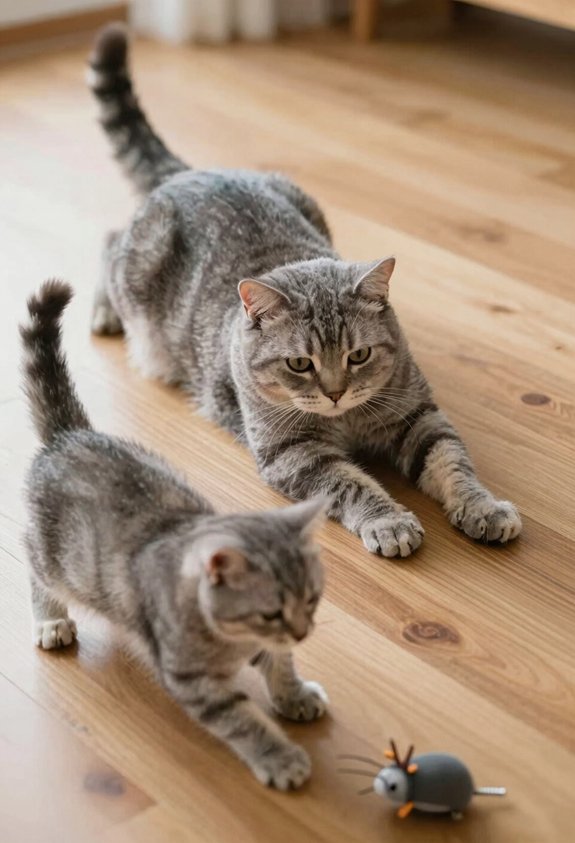
How can you tell if your senior cat needs more exercise? Look for these signs that indicate your furry friend might be feeling a little sluggish:
- Weight gain or loss: If your cat’s body shape changes notably, it could signal inactivity.
- Less interest in play: A sudden disinterest in toys or games can mean they need more movement to stimulate their instincts.
- Changes in behavior: If your cat seems more irritable or withdrawn, it might be a sign they need to get those paws moving again (after all, grumpy cats need cardio, too!).
Regular observation is key to keeping your senior cat healthy.
Tips for Encouraging Exercise in Your Senior Cat
Once you’ve noticed signs that your senior cat might need more exercise, it’s time to get creative in encouraging them to move.
Start with interactive toys, like feather wands or laser pointers, to spark their hunting instincts. You can also create an obstacle course using cushions or boxes for them to navigate.
Schedule short, playful sessions daily, gradually increasing the time as they adapt. Try engaging them in games that mimic their natural behaviors, like pouncing or climbing.
Finally, consider inviting a friend’s cat over for a playdate—cats love company! (Just don’t let them form a band; they might get too loud!)